
Manchester United is one of the biggest football teams in the world, which has experienced turmoil in recent years. Manchester United dominated English football prominently through the 1990s and 2000s under the management of Sir Alex Ferguson. During Ferguson’s tenure, the Red Devils won 13 Premier League titles, beginning with the inaugural 1992-93 season. After the retirement of Sir Alex Ferguson, Manchester United has struggled to find its feet in the Premier League, constantly disappointing fans with lacklustre performances. In this article, BoyleSports live casino will cover the glory days of Manchester United, as well as some of the managers who have failed to get the most out of the team.
The Glory Years of Manchester United
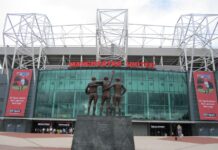
Manchester United is the most decorated football club in England, largely thanks to the Matt Busby and Sir Alex Ferguson Eras. English football in the 1950s was dominated by Manchester United, which was referred to as the Busby Babes. In the 1950s, Manchester United won 3 First Division titles, including back-to-back, asserting their dominance against fellow English clubs. The period of success was dampened by the deeply saddening 1958 Munich Air Disaster, which saw many of the Busby Babes tragically pass away. Matt Busby and Manchester United rebuilt the side, playing for their teammates who were no longer with them, to reach greatness for the club. In 1968, Manchester United became the first English club to win the European Cup, after beating Barcelona 4-1 in the final, coming just 10 years after the catastrophic air disaster. In the following season, Matt Busby announced his retirement from football, leaving the sport as a legend and one of the greatest Manchester United managers ever.
Sir Alex Ferguson joined Manchester United in 1986, following years of stability, in an attempt to revive the glory days. Since the retirement of Busby, Manchester United did not win any European or First Division titles; however, that would soon change with Sir Alex and his stern managerial approach. Sir Alex Ferguson revolutionised the club by utilising the youth set-up and sports science to gain an edge on opposing teams. In the 1990s, Sir Alex Ferguson’s Red Devils dominated English football, winning 6 trophies out of the 10 seasons, including the inaugural Premier League title. In the 90s, Manchester United became the first English club to win the domestic treble in the 1998/99 season, winning the UEFA Champions League and FA Cup, alongside the Premier League. Sir Alex Ferguson’s dominance continued into the 2000s, with him winning a further 7 Premier League titles, totalling 13 Premier League medals, the most of any club.
The Post Ferguson Struggles
Sir Alex Ferguson left the club in 2013 on a high note, after winning his 13th Premier League title, and handed over a well-regarded team to David Moyes. In Moyes’s first season in the Premier League, Manchester United finished 7th in the Premier League, which was the lowest finish in the club’s history in the Premier League. Additionally, finishing in 7th resulted in Manchester United missing out on the UEFA Champions League, ultimately leading to the club and the manager parting ways.
The manager role at Manchester United was vacant, and it was the Dutchman, Louis van Gaal, who was appointed in 2014. Louis van Gaal brought silverware back to Old Trafford, specifically the FA Cup trophy, in the 2015/16 season. Manchester United finished fourth in both seasons during Louis van Gaal’s tenure, leading to the manager facing the sack.
Towards the end of the 2010s, Manchester United hired a further two managers. The first was Jose Mourinho, a proven manager with a stern defensive approach. Jose led Manchester United to the EFL Cup, the Europa League, and runners-up in the Premier League, the most successful manager post-Sir Alex Ferguson. After a poor start to the 2017/18 season, he was sacked, and club legend Ole Gunnar Solskjær joined, bringing stability and excitement to fans.
The Recent Years
In recent years, Manchester United has been performing under club expectations, often featuring weak leadership and inconsistencies. The early 2020s saw two managers come and go, with Ralf Rangnick and Erik ten Hag both failing to meet the expectations needed to rebuild the English giants. Fast-forward to today’s Manchester United, who are managed by Ruben Amorim, who has brought structure and a clear tactical insight to the club, though results are yet to follow.
Despite not having the brightest of starts in his Manchester United career, Ruben Amorim shows promise for Manchester United fans with smart business and a clear tactic. In previous years under Ole, Ragnick, and ten Hag, Manchester United often looked one-dimensional and lacked a clear identity. Since joining the club, Amorim has set out his foundations, playing expansive football in a 3-4-2-1 formation.
The main promise under Ruben Amorim lies in the signings he has pursued, pursuing Premier League-proven players and international talents, which creates a strong model. Ruben Amorim has attracted some high-quality players from other Premier League contenders, showing there is a foundation to be built on for Manchester United. Some promising transfers since his arrival include Bryan Mbuemo, Mattheus Cunha, Benjamin Sesko, and others.
The tide is beginning to turn for Manchester United, although there are still numerous steps to go before the club competes against the best once again.