Across Chorlton, Didsbury, Levenshulme, and Whalley Range, a familiar scene is playing out. Scaffolding goes up on another Victorian terrace. Skips fill with plaster and old floorboards. And somewhere in the middle of the project, a decision gets made about the windows that the owner may come to regret.
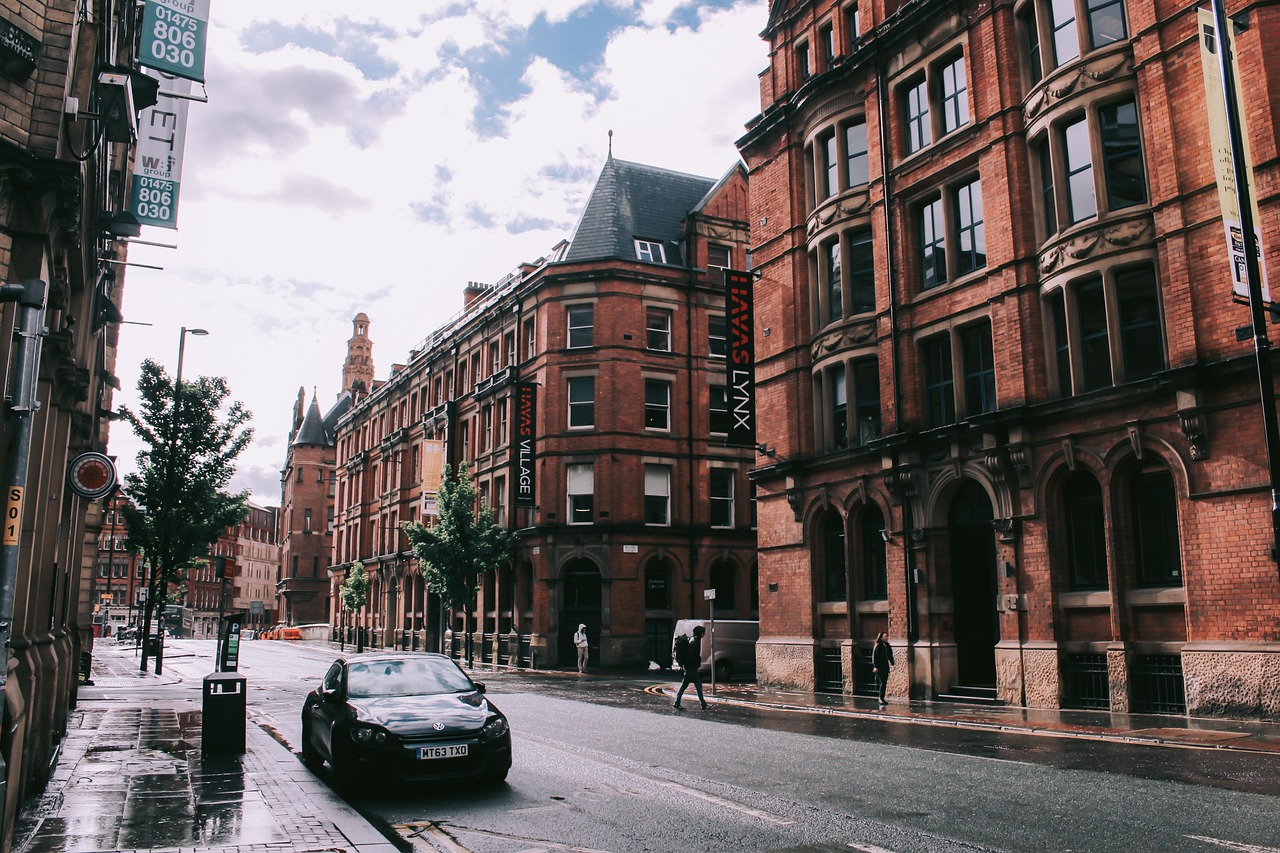
Greater Manchester has one of the largest concentrations of Victorian housing in England. These terraces – built between the 1840s and 1900s – were constructed with timber-framed windows as standard. Sash windows in the front elevation, casements to the rear. They were designed to suit the proportions of the building and, when maintained, could last well beyond a century.
Yet over the past thirty years, thousands of these original windows have been ripped out and replaced with uPVC. In many cases, it was a perfectly reasonable decision at the time. But as more homeowners tackle restoration projects across the city, the consequences of that swap are becoming clearer – and so are the rules about what you can and cannot do.
The uPVC Problem Nobody Talks About
uPVC windows were marketed as the maintenance-free alternative. No painting, no draughts, no fuss. For a generation of homeowners, they solved an immediate problem at an affordable price.
But uPVC frames were never designed to replicate the proportions of a Victorian window. The profiles are thicker, the sightlines heavier, and the glazing bars – if they exist at all – are stuck on rather than structural. On a Victorian terrace, the visual difference is stark. A street of period properties with one or two uPVC replacements stands out for all the wrong reasons.
The functional issues are emerging too. First-generation uPVC windows, installed in the 1990s and early 2000s, are now reaching end of life. Frames discolour and become brittle. Sealed units fail, leaving condensation trapped between the panes. Hinges wear out and replacement parts for older systems become difficult to source. Unlike timber, uPVC cannot be repaired – once the frame fails, the entire unit needs replacing.
For homeowners who bought a Victorian terrace precisely because of its character, the realisation that their plastic windows are degrading faster than the originals they replaced is a difficult pill to swallow.
Conservation Areas: The Rules Many Owners Discover Too Late
Greater Manchester has more than 60 designated conservation areas. In Manchester alone, Didsbury St James, Castlefield, Ancoats, Albert Park, and Victoria Park are among the most well-known. Stockport, Trafford, Salford, and Tameside each have their own designations covering hundreds of period properties.
Within these zones, homeowners do not have an automatic right to replace windows with whatever material they choose. Under Article 4 directions – which many Manchester conservation areas carry – permitted development rights are removed. That means replacing a timber sash window with uPVC requires planning permission. And in most cases, that permission will be refused.
The logic is straightforward: conservation areas exist to protect the architectural character of a neighbourhood. Original timber windows are considered a defining feature of Victorian and Edwardian streetscapes. Replacing them with plastic fundamentally changes the appearance of both the individual property and the wider terrace.
The problem is that many homeowners only discover these restrictions after they have already committed to a project. A conversation with the local planning department before ordering windows can save thousands of pounds and months of frustration.
What a Proper Timber Restoration Actually Involves
For owners of Victorian terraces, the choice increasingly comes down to two options: restore the existing timber windows or replace them with new timber frames that match the originals.
Restoration makes sense when the existing frames are structurally sound. A skilled joiner can splice in new timber to replace rotten sections, rebalance sash mechanisms, upgrade to draught-proof seals, and install slim-profile double-glazed units within the original frame. The result is a window that looks exactly as it did when the house was built, but performs to modern thermal standards.
Where original windows are beyond repair, replacement with new timber frames is the accepted alternative. Modern engineered timber windows are factory-finished with microporous coatings that last 8 to 12 years between maintenance cycles. They achieve U-values that meet Part L of the Building Regulations and, when specified correctly, satisfy conservation officer requirements for profile depth, glazing bar detail, and opening mechanism.
For homeowners taking this route, companies such as Timber Windows Direct offer made-to-measure timber sash and casement windows designed to match period property proportions. A bespoke approach is particularly important in Victorian terraces, where window openings are rarely standard sizes and millimetre-level accuracy determines whether the finished result looks authentic or awkward.
The cost is higher than uPVC – typically 30 to 50 per cent more for a like-for-like replacement. But the lifespan tells a different story. A well-maintained timber window can last 60 years or more, compared to 20 to 25 for uPVC. Over the life of the property, timber often works out as the more economical choice.
Energy Efficiency: The Argument That Changed
One of the most persistent objections to timber windows has been energy performance. The assumption was that uPVC or aluminium frames offered superior insulation. That was never entirely accurate, and recent developments have shifted the argument further.
Timber is a naturally insulating material. Its cellular structure traps air, which means timber frames conduct far less heat than aluminium and perform comparably to – or better than – standard uPVC profiles. When paired with argon-filled double glazing or triple-glazed units, a modern timber window achieves U-values well below the 1.4 W/m²K threshold required by Part L.
This matters for homeowners looking to improve their EPC rating. With the government targeting EPC C for all homes by 2035, window upgrades are one of the most effective ways to shift a property’s score. Choosing timber frames that meet current building regulations means homeowners can improve energy performance without compromising the period character of the building.
For terraces in Manchester’s conservation areas, this is significant. It means there is no longer a trade-off between planning compliance and energy efficiency. The right timber window delivers both.
Getting It Right from the Start
The mistakes homeowners make with windows on Victorian terraces are rarely about bad intentions. They are about timing, information, and assumptions that have not kept pace with changes in materials, regulations, and market expectations.
Before committing to any window replacement on a period property in Greater Manchester, three steps are worth taking. First, check whether the property sits within a conservation area – the local council’s planning portal will confirm this in minutes. Second, speak to the conservation officer if an Article 4 direction applies, and establish what materials and designs will be accepted. Third, get a proper survey of the existing windows to determine whether restoration is viable before assuming full replacement is necessary.
Manchester’s Victorian terraces are among the city’s most distinctive assets. The windows are a bigger part of that story than most people realise. Getting them right is worth the extra homework.