A team of experts that specialise in tackling serious organised crime, including the modern-day issue of drugs being sold on websites and via QR codes are working with GMP.
Selling drugs via QR codes that lead to online sites is merely a modern method that dealers may exploit to make a transaction discreet and convenient for the customer, while trying to avoid detection by police.
A recent case study shows when this team of experts, worked together to bring one such offender, Ivan Hoque, to justice.

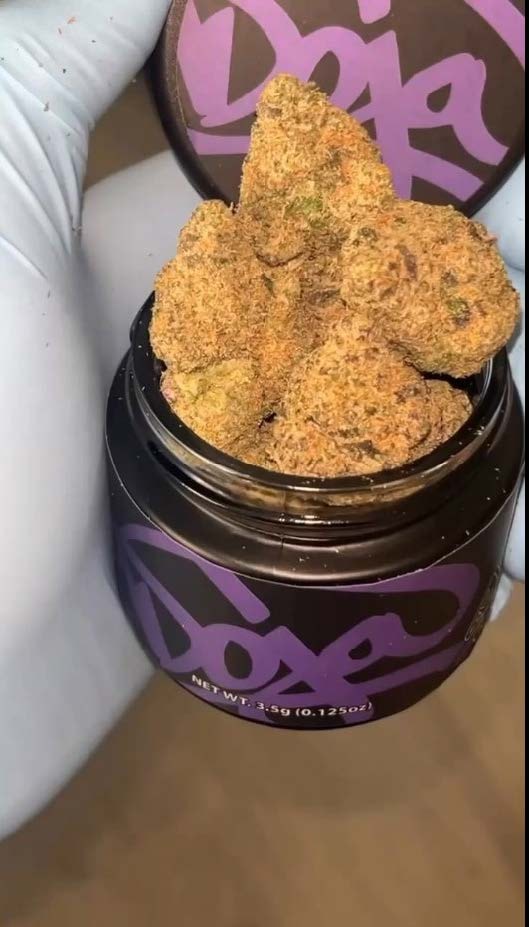
Investigators uncovered that Hoque was using an encrypted online chat to advertise the sale of cannabis, ketamine, and other cannabis products.
Police searched Hoque’s home address where they were met with him stood on the upstairs landing yielding a machete.
He was arrested on suspicion of being concerned in the supply of class B drugs and possession of an offensive weapon in a private place.
The search of his address saw several items were seized including a large quantity of drugs, a large quantity of cash, a burner phone, digital scales and snap bags, a machete and a zombie knife.
Hoque pleaded guilty to possession with intent to supply Methylenedioxymethamphetamine (MDMA) and cannabis, being concerned in the supply of cannabis and ketamine, and possession of an offensive weapon in a private place and was sentenced to 24 months concurrent in prison.
Detective Superintendent Joe Harrop is head of our Serious and Organised Crime Unit (SOCU), he said: “The number of drugs being sold online and via QR codes is a fairly small percentage. That being said, we have modernised, and doubled the size of our Cyber Crime Unit.
“We are also one of only five forces to have a dedicated county lines task force, which is really successful.
“As part of that task force, we’ve got social media investigators whose role is to specifically look at the online drugs market and find ways for us to tackle it. So, I think we’re well placed from a police perspective to deal with it.”
Detective Constable Rhiann O’Malley, a social media investigator, said: “The majority of social media apps allow you to share your profile via a QR code. There’s QR codes that lead to a social media profile selling drugs, and then you have QR codes leading to traditional websites selling drugs.
“A popular trend of a lot of drugs sold online is the use of the postal system, which and many young people seemingly prefer because it removes the risk of you having to interact with anybody.
“That is the benefit of social media – you never have to meet somebody on a dark corner of you get it delivered to your home address.
“Scams are also quite common, and people do run the risk of opening up their devices to malware and spam when scanning these.
“People could find themselves subject to fraud rather than successfully buying drugs.”