On 15 June 1996 at 11.17am, a bomb went off. The blast tore through the city centre with devastating effect, windows shattered half a mile way, buildings buckled, and a plume of dust, rubble and steel flew into the air.
More than 200 people were injured, but remarkably and thankfully, nobody died.
traffic warden was working that morning, placing a parking ticket on the windscreen of a Ford Cargo van that was left outside of Marks & Spencer’s on the corner of Corporation Street and Cannon Street.
It was that vehicle, in which we now know was packed with explosives, that would rewrite history.
Just before 10am, a call was made, warning that a bomb had been planted in that same vehicle, promoting a mass-evacuation of around 80,000 people – one of the largest evacuations in British history.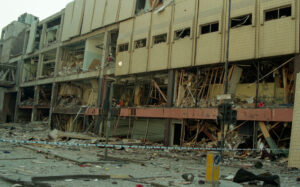
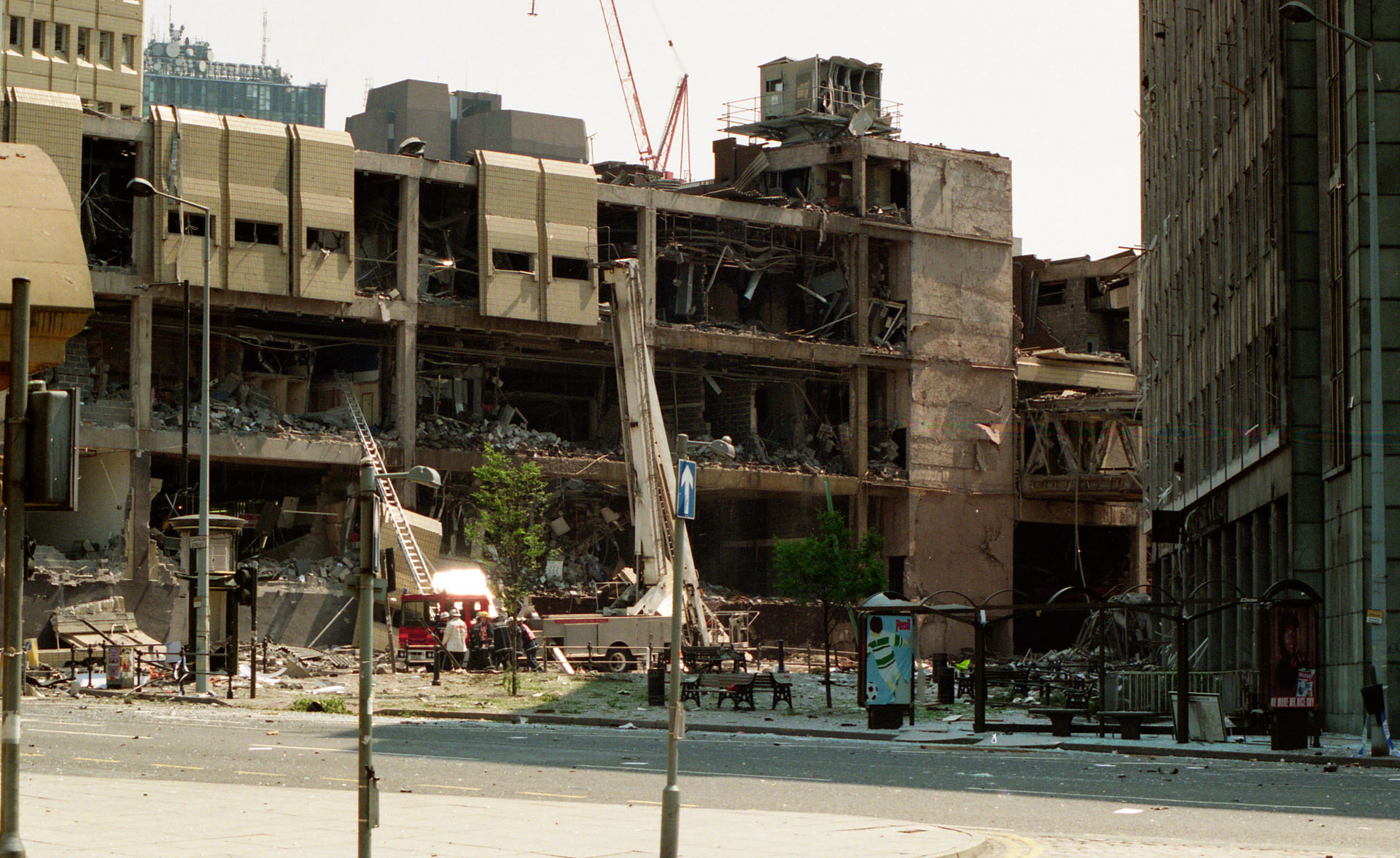
At 11.17am, the bomb went off. The blast tore through the city centre with devastating effect, windows shattered half a mile way, buildings buckled, and a plume of dust, rubble and steel flew into the air.
It was the biggest bomb detonation within the United Kingdom since World War II. More than 200 people were injured, but remarkably, nobody died.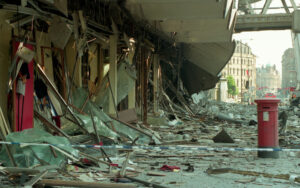
Much of Corporation Street crumbled, however, – one thing stood proud – and became the symbol of our resilience, a red post box. As the news filtered around the world, the seemingly untouched box surrounded by devastation, became an enduring image of the attack and the city’s determination to recover.
Lee Cullen – who now works in GMP’s Serious Crime Division – was a Tactical Aid Unit (TAU) constable working in the city centre that day, he recalls how his shift unfolded on that fateful day.
“We had come on duty on the Saturday morning and our team, Group Four had the city centre as our area of responsibility during Euro96.
“Our skipper came into the parade room at Claytonbrook and told us that a confirmed code had been passed to the duty officer from the IRA that a large device was in the city centre on Corporation Street.
“We bussed down to the city centre on blues and twos to the cordon and landed at the Corn Exchange. We didn’t know the full size of the device at the time but knew that the cordon for a device potentially of that size needed to be doubled if not trebled from what it was.
“We passed this over the radio and moved our cordon back up along Corporation Street by around 350 metres. When the bomb went off, I was in direct eyesight of the device as it detonated.
“The bright flash followed instantaneously by a huge fire ball and percussion wave is something that has lived with me to this day. I had heard explosions before but that sound a huge deep crump was deafening.
“The amount of debris that was thrown out from the epicentre was substantial. People were showered in glass at my location and some people suffered lacerations from falling glass as buildings bowed under the blast.
“Following the explosion, our initial brief was to clear buildings within the immediate blast zone. We went back to the Corn Exchange and were made aware that people were trapped inside one of the buildings.
“The bomb had caused door frames to twist and buckle making the opening of doors almost impossible and we had to wham ram into these buildings to get people out. I brought a male down from an office block.
“He had lost one of his shoes and blood was pouring from his face, there was that much glass on the floor that I made the decision to lift him over my shoulder and run him down to the meeting point.
“Later we were used to clear members of the public from the city centre as we were getting reports of falling glass and debris off the buildings.
“It was a surreal scene along Corporation Street, with many of the shop fronts hollowed out and there were mannequins hanging out of the windows and general blast debris all over the epicentre. There was debris up on the roofs of buildings across the entire blast radius.”
The physical damage was plain to see, estimates put the cost at around £700 million, making it one of the most expensive terrorist attacks in British history at the time.
Entire sections of the city centre were devastated. Millions of visitors pass through the city every year, often unaware of just how different Manchester looked before 1996.
Yet for those who remember it, the memory remains vivid.
Assistant Chief Constable Chris Sykes said: “It is incredible to think we are now 30 years on since one of the force’s biggest policing operations, and one of the largest evacuations in British history.
“80,000 people were in the area at the time, it was supposed to be a weekend of jubilation for the country and those visiting Old Trafford the following day, but that Saturday took an unexpected turn that would change the look and feel of Greater Manchester forever.
“I was a police constable at the time, albeit I was not involved, the bravery and professionalism our officers showed that day, in a testing environment, prevented potential mass casualties.
“We are aware of the update from Counter Terrorism Policing North West that all lines of enquiry have now been exhausted have been exhausted by their detectives, and the investigation is now no longer active.”