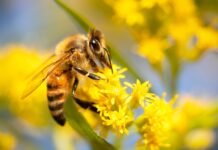
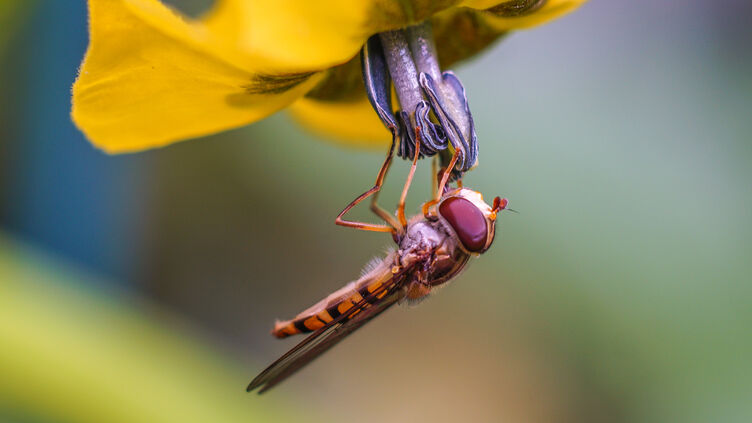
Increasing urbanisation is linked to a decline in crucial pollinator populations, including nocturnal moths, hoverflies, and bees, according to a new study from the University of Sheffield.
On allotment sites in Sheffield, Leeds and Leicester, a research team sampled pollinator species in a range of urban settings from city centres to more suburban areas. They found that there was a decline in species abundance and richness – up to 43 per cent – on allotments situated in more built-up areas.
The findings suggest that a wide range of pollinators are under threat in urban landscapes, and the researchers warn that more needs to be done to understand and conserve pollinating insects that are vulnerable to the effects of habitat loss through urbanisation.
The study shows that the cause of reduced pollinator diversity and abundance varies depending on the species, but is primarily driven through a reduction in the tree canopy and semi-natural habitat that form part of the green spaces found in our cities.
Jill Edmondson, senior author from the University of Sheffield’s School of Biosciences, said: “Allotments form greenspace oases in the urban landscape, with a rich mix of crops and flowers species to support pollinator communities, but, as the area of impervious surface (or the concrete, tarmac and buildings that often form the urban landscape we recognise) around allotments increased there was less habitat available for all pollinator groups. This may have consequences for crop pollination and ultimately yield in more urban allotments.
“Our study demonstrates the importance of urban semi-natural spaces for insects, which we rely on, not just to make our gardens beautiful, but to support worldwide farming systems.”
Stuart Campbell, co-author from the University of Sheffield’s School of Biosciences, said: “All pollinating insects struggle to find suitable food and habitat in cities, but there haven’t been many studies directly comparing different groups. The greater sensitivity of hoverflies and moths to urbanisation might be due to their ecological requirements.
“All of these species need flowers to feed on, but moths also require tree and shrub canopies, and food plants for their caterpillars, while many hoverflies require stagnant water to breed. These are all habitat characteristics that can be much harder to find in more heavily built up areas, and we will need to consider these features in order to conserve such a diverse group of insects for future generations.”
The team say the findings should underpin a more nuanced approach to pollinator conservation, and point out that more engagement with urban planners, stakeholders and policymakers is required to successfully protect the habitat features needed to support and sustain diverse pollinating insect communities in urban areas.