Manchester has never been short on identity. From its industrial past to its music, sport and politics, it’s a city that definitely knows its place in the world and in history. What’s interesting though is how, over recent years, Manchester has been reworking that identity. It’s not erasing its history, more reusing it.
In this article we’ll look at some examples of the way that Manchester is reshaping its spaces, whether it’s for living, working or celebrating.
From mills to multi-purpose spaces
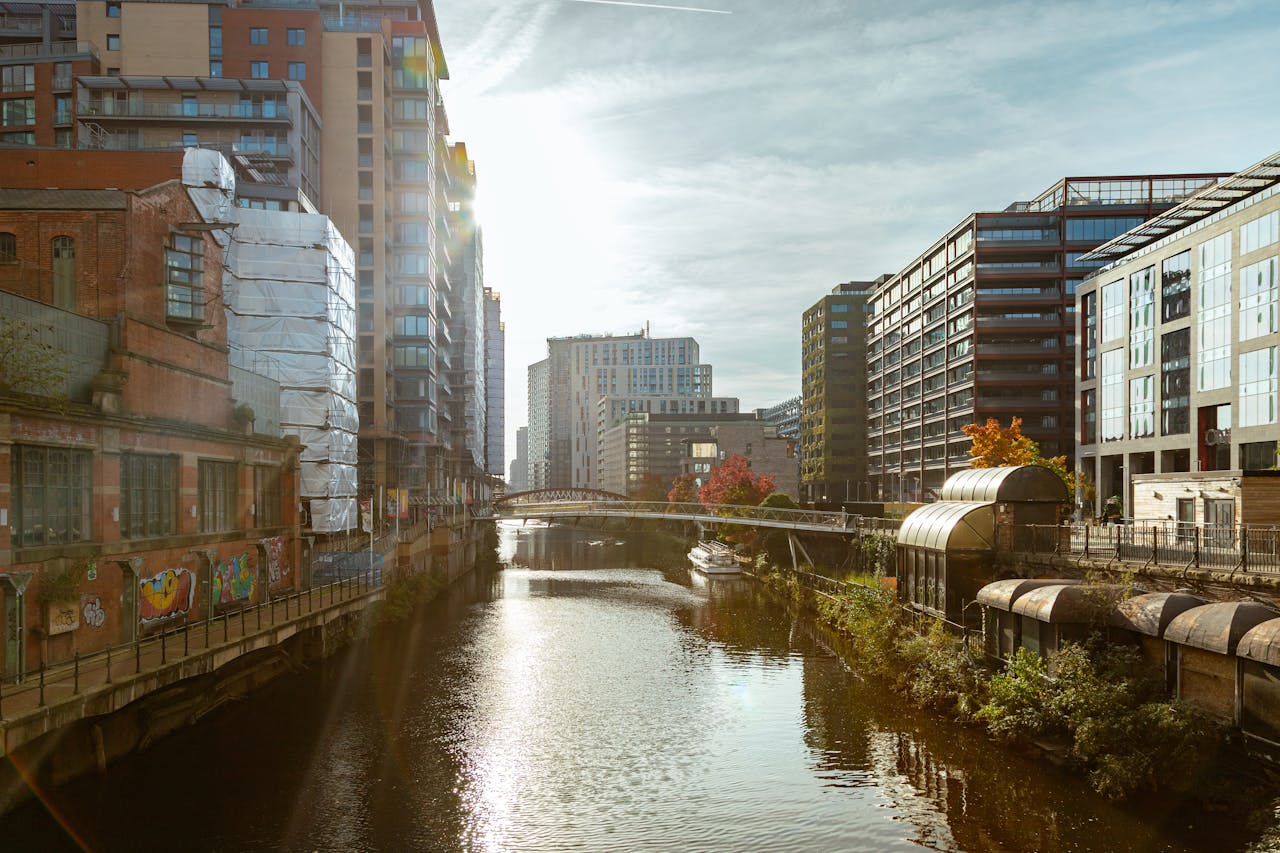
Manchester saw its fair share of bomb damage during the Second World War – it was the 11th most heavily bombed area in the UK – and yet one of Manchester’s most distinctive features is the sheer number of Victorian buildings and former industrial premises that are still standing and still in use. Old cotton mills, warehouses and factories have become offices, homes, cultural venues and event spaces, often without losing their original character.
Areas like Ancoats and Castlefield are full of red-brick buildings that really embrace this industrial heritage, showing off exposed steel, vast windows and proportions designed for machinery rather than people. Instead of smoothing these features away, Manchester has leaned into them and these former workspaces now host everything from studios and restaurants to exhibitions and large public events, creating places that feel adaptable rather than precious.
A city that celebrates without losing its edge
That same flexibility has shaped how Manchester hosts major life events, including weddings. Rather than defaulting to traditional hotel venues, a lot of couples in the area are choosing to host their big day somewhere that reflects the city’s industrial and cultural DNA.
Browse a list of Manchester wedding venues, and you’ll find options like Victoria Warehouse, once a working warehouse, and now offering dramatic scale, exposed brick and an unapologetically urban feel. The Monastery Manchester, a restored former friary, brings a very different atmosphere, soaring stonework and Gothic arches repurposed for modern celebrations.
If you’re looking for something a bit more modern, places like Manchester Art Gallery show how civic and cultural buildings are being reimagined as event spaces without losing their public identity. It can make a wedding day extra special to be able to get a sense of all the lives a venue has lived before.
Green space and breathing room
Manchester’s reputation as a dense, energetic city sometimes obscures how green it actually is. Large parks such as Heaton Park and the tranquil Whitworth Park offer genuine breathing space, while canals and waterways cut through former industrial areas, softening them.
Recent regeneration has been a lot more focused on walkability, outdoor seating and integrating green space into redeveloped neighbourhoods. This is important not just for residents, but for how people experience the city during visits and events. Being able to move easily between busy streets, historic buildings and quieter outdoor spaces changes the pace of the city.
Taken together, these shifts show a Manchester that isn’t trying to reinvent itself from scratch. By reusing its buildings, rethinking how it celebrates, and making room to pause as well as push forward, the city is evolving in a way that feels confident, practical and distinctly its own.