
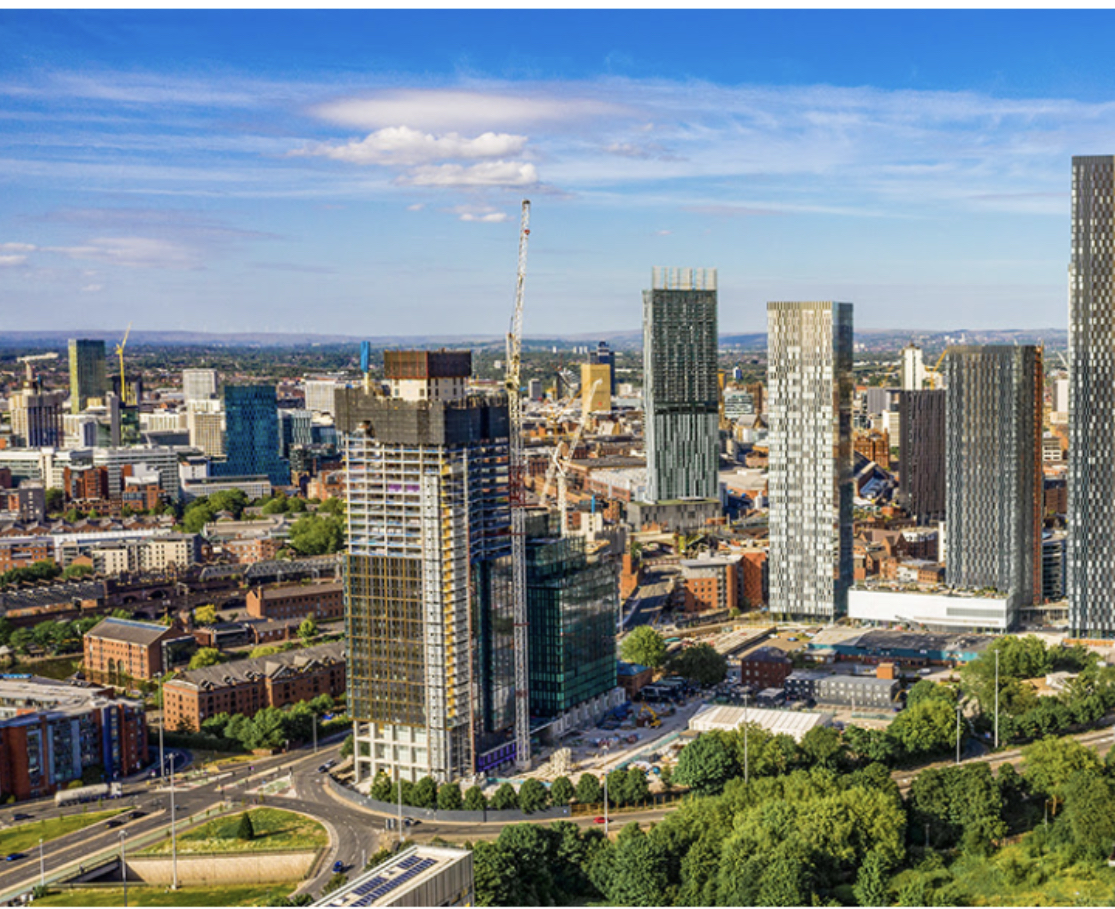
construction starts in the Northwest rose by 27% in the three months to July 2025, standing 18% higher than the same period in 2024, according to independent construction and property management consultancy, Rider Levett Bucknall (RLB UK).
This growth was driven primarily by private housing, with starts increasing by 24% quarter-on-quarter and 40% on the previous year. In contrast, social housing starts declined by 33% compared to the previous quarter and 24% year-on-year, indicating a slowdown in public sector-led development.
This insight comes from RLB UK’s Construction Market Intelligence Q3 report which states that tender prices in the Northwest are forecast to rise by around 3.5% over the next 12 months, fuelled by sustained demand and ongoing inflation in labour and materials.
Stuart Wands, Partner in RLB’s Manchester office, said:
“The North West’s construction industry is currently experiencing mixed conditions. While the overall UK economy shows slight growth, RLB forecasts that the construction will be modest, driven in part by the improving, though cautious, recovery in the private housing and commercial sectors.
“Challenges remain, including ongoing high costs for materials and labour, a need for clarity on planning reforms and government policy, and a persistent skilled worker shortage. Despite these headwinds, infrastructure and NHS-related projects, alongside new commercial opportunities, are expected to sustain construction activity in the short to medium term.
“The sentiment of the construction market in Manchester and the Liverpool City region is one of optimism tinged with realism due to persistent structural challenges. The region’s main contractors are navigating a complex pricing environment shaped by strategic bidding and persistent cost pressures. Many of them are adopting two-stage tendering models and prioritising repeat business. This allows for better risk control and early client engagement, though it may shift inflation risk onto the supply chain.”
Office refurbishment and extension schemes rose by 32% last year, with 1.6 million sq ft either completed or underway. Manchester remains the strongest performer in office lettings, supported by rising demand for sustainable and well-located workspaces.
Meanwhile, though hosting fewer headline office schemes, Liverpool, is recording growth through commercial refurbishment and mixed-use regeneration, particularly in and around the Liverpool Waters and Knowledge Quarter districts.
According to the report, Manchester is emerging as the UK’s secondary data centre hub. Spillover demand from London, combined with increasing requirements for digital infrastructure, is positioning the city as a key location for future investment in this sector.
In logistics and manufacturing, however, supply constraints remain a challenge. Greater Manchester currently has just three logistics units over 100,000 sq ft under construction, reflecting a limited development pipeline. Demand continues to outstrip supply, particularly around Trafford Park and Manchester Airport.
By contrast, RLB UK says Merseyside and the Wirral are seeing more logistics development, although projects across the region are experiencing delays linked to power supply capacity, especially the need to support charging infrastructure for heavy goods vehicles.