
major rollout of new artificial intelligence (AI) tools across the NHS is being accelerated to help cut waiting lists and improve care for millions of patients.
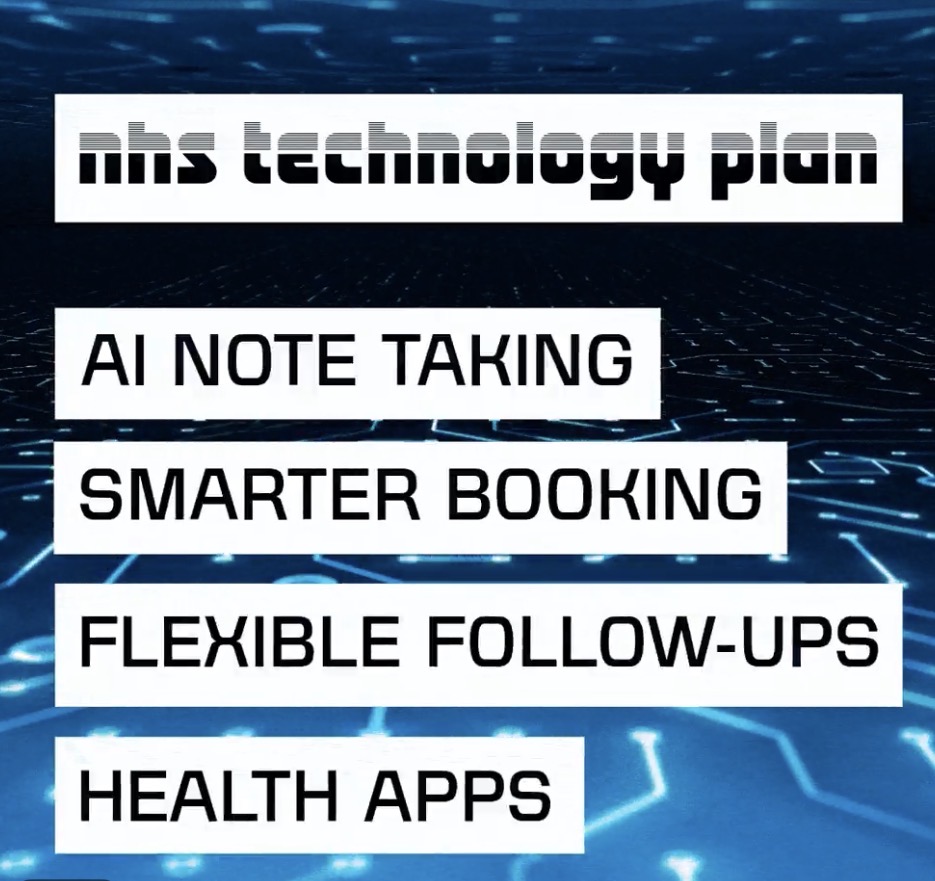
A new AI triage tool in the NHS App that helps direct patients to the most appropriate NHS service, as well as widespread access to AI notetaking tools to reduce admin for NHS staff, are among the improvements being prioritised across England.
Today the NHS is setting out how £10 billion of funding over the next three years, allocated by the government last year, will be used for a major overhaul of the health service’s technology, digital and data systems.
The improvements are expected to deliver around half of the commitments in the government’s 10 Year Health Plan and generate £41 billion in total benefits over the next decade.
The NHS App’s new AI triage tool is being rolled out following a successful trial. It is due to reach more than 200,000 patients within the next 12 months and be available to all NHS App users by April 2028.
The tool makes sure patients are directed to the right care, first time – whether that’s a GP appointment, pharmacy, A&E, community service or self-care advice – by adapting questions depending on responses to get a more detailed view of a patient’s condition.
It then either directs them to the most appropriate service or provides clinicians with the information they need to prioritise care.
An initial trial at a GP practice in Sussex resulted in a 29% reduction in the number of people queuing on the phone – helping to end the 8am rush while maintaining patient satisfaction levels.
Patients will continue to have the option of using traditional methods to contact their GP practice alongside the new AI triage tool in the NHS App.
NHS England will also support a national rollout of AI tools which record conversations between patients and NHS staff to generate real-time transcriptions and clinical summaries.
The rollout will start with hospital appointments not requiring an overnight stay where their use has been proven to significantly reduce the amount of time clinicians spent on admin.
A major NHS study published last year found that AI notetaking tools, known as ambient voice technology, free up clinicians to spend nearly a quarter more of their time with patients.
The study, led by Great Ormond Street Hospital, found that scaling the technology nationally to over 11,000 A&E clinicians in England could create space for over 9,000 extra A&E consultations each day.
Tens of thousands of NHS staff across south-west London will become the latest to benefit from the tech which is being rolled out across four NHS trusts – St George’s, Epsom and St Helier, Croydon, and Kingston and Richmond.
A pilot in the emergency department at St George’s Hospital in Tooting found that it saved clinicians an average of 47 minutes per shift – allowing each member of staff to see an additional patient every shift.
Alder Hey Children’s NHS Foundation Trust and Manchester University NHS Foundation Trust are also expanding their AI notetaking programmes to more than 3,000 clinicians following successful pilots.
Other plans that are part of the £10 billion technology, digital and data investment include NHS App users being able join online appointments with expert clinicians across England using the NHS’s new virtual hospital service – NHS Online.
Patients will also be able to use the NHS App to request follow-up appointments after treatment, and NHS-approved digital tools will help them manage exercise and rehabilitation for common lung and heart conditions – giving patients more control of their healthcare.
The NHS will also introduce a Single Patient Record to provide specialists across the NHS with a full picture of a patient’s medical history, roll out new digital tools to help staff manage urgent and planned patient care more effectively, and enhance cyber security to protect patient data and NHS systems.
More than 500,000 NHS staff are also being given access to Microsoft Copilot after a trial led to workers cutting the amount of time they spent on admin by an average of two days every month.
The AI personal assistant helps staff to draft documents and analyse data more efficiently, freeing up more time for patient care.
Sir Jim Mackey, Chief Executive of NHS England, said: “The major overhaul of tech we’re making over the next few years will transform services.
“The new AI tool in the NHS App will help get patients to the best service for their needs first time – whether that’s a GP appointment, trip to a pharmacy or advice on caring for themselves at home – so that clinicians can make sure those most in need of a GP appointment can get one sooner.
“We’re also seeing huge benefits from the introduction of AI notetaking tools, with clinicians finding they’re able to spend up to a quarter more of their time with patients, so we’re rolling out the tools as quickly as possible across the NHS.
“We’re prioritising the improvements that will make the biggest difference and supporting local leaders to adopt them to drive change in their services – helping to cut waiting lists and improve care for millions of patients so that the NHS is fit for the future.”