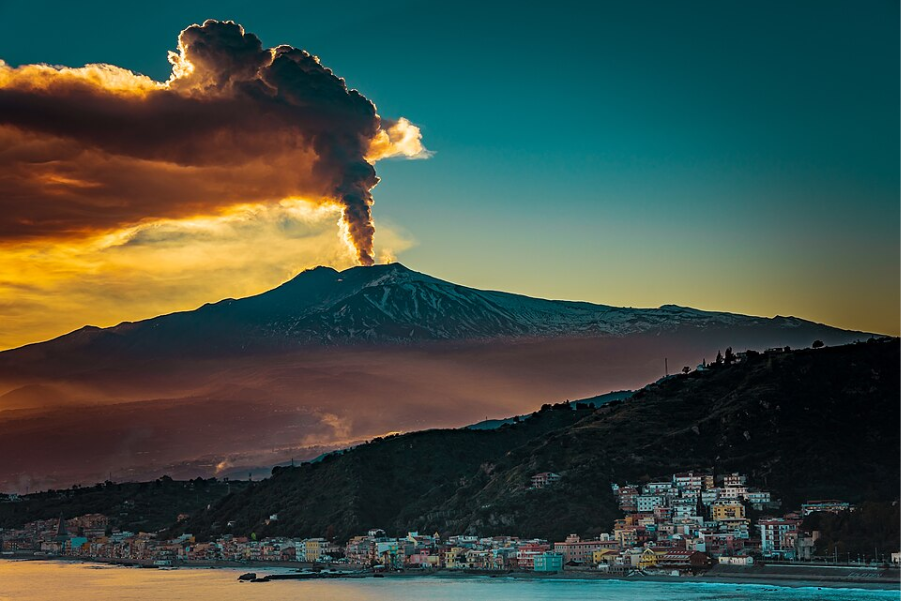
Researchers at an international gathering hosted at the University of St Andrews are calling for governments to reassess their response to volcanic eruptions.
The Volcanic Impacts on Climate and Society Conference 2026 , taking place between 16th and 18th June at the University, will feature new research from volcanologists, climate scientists, historians and artists, piecing together how past civilisations reacted to the consequences of volcanic eruptions.
From disease and famines in ancient Greece to children in 17th Century Scotland forced to steal food to deal with poor harvests, the conference will shed new light on how past eruptions, which often took place in remote corners of the world, had global impacts.
Using knowledge of past eruptions, the group of international researchers will reimagine these events happening today to assess the preparedne
Through this novel ‘wargame’ scenario the researchers hope to identify the key policy decisions and government interventions n
Dr William Hutchison from the School of Earth and Environmental Sciences at St Andrews, said: “Governments across the world are increasingly forced to battle the impacts of global warming, but it is also vital to prepare for extreme climate shocks.
Our modern globalised world, with complex networks of food, transport and energy, has yet to be hit by a massive climate changing eru
Such events have a 1-in-6 probability of happening this century and these scenario exercises will allow us to understand key uncertainties and stress test our response systems ahea
Dr Ruben Post, from the School of Classics at St Andrews, added: “This research into the effects of large volcanic eruptions on the climate throughout history is relevant not just to scholars of the past, but also to people today. We can see from historical research that there can be hundreds or even thousands of years between such events, but they have the potential to impact the climate and cause serious disruption globally.
The last really large eruption, Tambora in 1815, caused the “year without a summer;” if an even larger eruption were to occur tomorrow, it could abruptly cause multiple years of cooling at a hemispheric or global scale, with all sorts of unanticipated consequences for everything from agriculture to air travel.”