
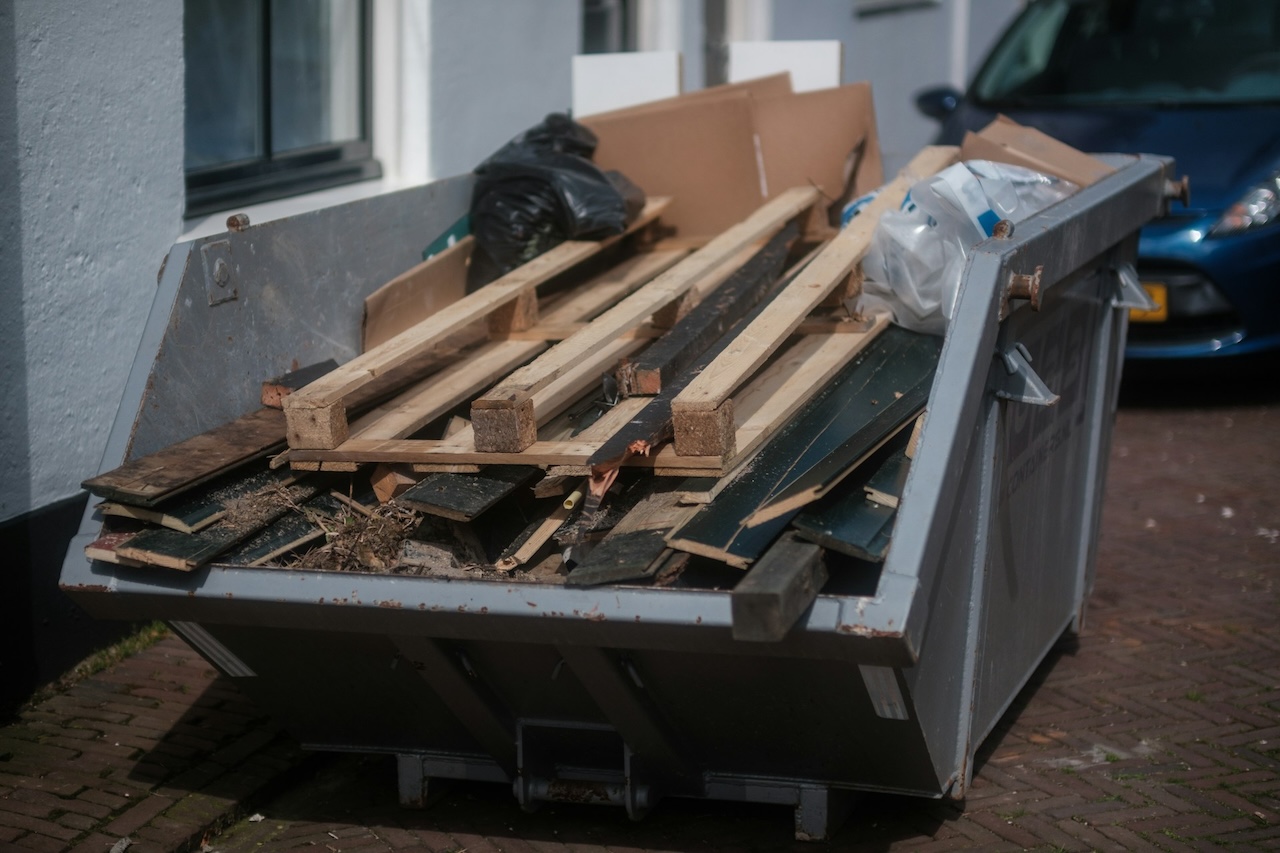
When property renovations or clear-outs are carried out, they often includes a range of different types of rubbish, from old fixtures to garden trimmings and heavy soil. It is natural to wonder why the cost of getting rid of this rubbish has changed over recent years.
To a certain extent, the answer comes down to the UK Landfill Tax. Because of these flat-rate costs, the days of ordering a large builder’s skip “just in case” are over.
Property owners are now having to accurately assess their waste before ordering. To help ensure that projects are not overspending on waste disposal, it is essential to calculate the precise volume of rubbish the project will produce. Indeed, statistics show 73% overestimate skip hire sizes.
Understanding the Landfill Tax
Contrary to popular belief, skip companies do not set prices purely for profit; a large portion of the cost goes directly to the government. The Landfill Tax was introduced to encourage more ethical means of waste disposal and to deter the public from sending rubbish to landfill sites. The standard rate of this tax increases consistently, making the disposal of mixed, active waste more expensive.
The Volume vs. Weight Dilemma
When hiring a general waste skip, a flat fee is paid based on the volume or size of the container. However, when skip companies dispose of the waste at specialist facilities or landfill sites, they are charged by weight. To cover the potential cost of a very heavy skip, companies must price their skips to account for the highest possible landfill tax. Therefore, if a large skip is only half-filled with light rubbish, the cost still reflects the heavy tax burden.
The Importance of Waste Segregation
Another major change reshaping the industry is the need to separate different types of rubbish. The government charges a significantly lower tax rate for inactive or inert waste, such as soil, rubble, and bricks. If large amounts of general waste are mixed with inert waste, the entire skip container will be charged at the higher standard rate. To help out with keeping costs down, many property developers are now opting to hire separate, smaller skips to keep heavy rubble away from general household rubbish.
How the Industry is Adapting
Regardless of the rising taxes, there is a positive outcome. Consistent use of landfills in the past has left the UK with no choice but to change waste disposal practices and turn to more sustainable methods. Today, skip companies will recycle as much waste as possible. Dedicated waste transfer stations will carry the rubbish back to the supplier’s site before it is sorted into different materials. Any items that are large will be removed so they can be separated into different materials. Each waste category will be sorted by type and stripped into subcategories. For example, soil will be screened and rubble will be crushed. Everything that can be recycled will be, meaning that despite the higher initial cost of hiring a skip, a much lower percentage of property waste actually ends up in a landfill site.
Factoring in Council Permits
When a general waste skip is hired, it is often placed on a public road or pavement rather than a private driveway. To do this legally, a council permit is strictly required. If the wrong size skip is ordered initially, a second permit will need to be purchased for a replacement container. This further highlights why accurate planning and streamlining in waste collection are so important for property owners today.
The Dangers of Illegal Waste Disposal
To help ensure that ethical waste disposal is being practised, it is crucial to avoid operators who charge suspiciously low prices for their services. Because the government tax is a fixed cost, lower prices often equate to the poor management of waste and bad disposal practices such as fly tipping. If rubbish from a property is found illegally dumped, the property owner can be held legally responsible and face severe financial penalties. Thorough research must be done when choosing a company, and proof of a valid waste carrier licence should always be requested to guarantee that the rubbish is handled correctly.