

A Wigan mum whose right breast collapsed before being told she had an aggressive form of cancer and a poor prognosis, is now fighting fit 17 years later.
Sue Cook is starring in a Cancer Research UK social media awareness film on having had the chance to spend more time with her loved ones thanks to the charity’s role in radiotherapy.
The mum-of-four religiously checked her breasts on pay day once a month and when she felt her right breast was slightly bigger than the left, and could also feel a fine knotted thread under the skin, she booked an appointment with her GP.
On the day of seeing the GP, Sue awoke and was shocked to find her entire right breast had collapsed overnight.
Sue’s GP referred her immediately and she was in hospital the following morning having a mammogram and biopsy. Even before Sue had left the hospital, she had been presented with breast cancer leaflets.
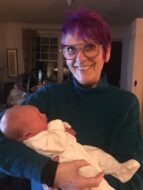 The following week she and her husband George returned for the results and Sue was told she had an extremely fast-growing form of breast cancer and a poor prognosis.
She needed chemotherapy in an effort to shrink the multiple tumours which had joined together, attached to the chest wall and made her breast collapse.
Sue struggled with the effects of the chemotherapy, lost weight and ended up in hospital with sepsis.
She needed a radical mastectomy which involved removing her right breast, muscles and lymph nodes.
The former art teacher then had daily radiotherapy. Cancer Research UK was a key player in the development of radiotherapy, which now benefits millions of people with cancer worldwide.
From personalising radiotherapy to harnessing new technologies, the charity’s researchers are continuing to innovate – making radiotherapy even more effective with fewer side effects.
Sue also had her left breast removed and was then placed on the drug tamoxifen for 14 years. Cancer Research UK played a leading role in developing tamoxifen which is a type of hormone therapy.
Sue also took the drug herceptin. Again, Cancer Research UK scientists carried out work that was key in the development of the drug.
The grandmother-of-eight, from Wrightington, is now aged 71 and enjoying a retirement she feared she might not have reached when she was initially diagnosed aged 54.
Sue, who still has annual check-ups, credits Cancer Research UK with helping to save her life and said: “Without Cancer Research UK I simply wouldn’t be here today. The advances in radiotherapy, the tamoxifen and herceptin mean I am alive today and loving my life.”
Sue understands the power of research more than most. That’s why she’s urging people across the North West to donate monthly to the charity to help fund more breakthroughs that matter.
Thanks to huge strides in prevention, detection and treatment, UK cancer death rates have reached a record low and, with a 12 per cent fall in the North West in the last decade alone,more people can now make memories, celebrate milestones and enjoy more precious time with their loved ones.
Sue added: “Stories like mine simply wouldn’t be possible without vital funds to keep the charity’s researchers working towards more ‘Eureka!’ moments. But cancer remains the UK’s biggest killer, so we must continue to back research into new and better ways to beat this devastating disease. I know first-hand it’s bringing hope to thousands. So, I hope people across the region will give what they can.”
Thanks to the generosity of its supporters, Cancer Research UK has helped double cancer survival in the UK over the past 50 years.
The charity’s spokesperson for the North, Jane Bullock, said: “With new technologies opening doors to new discoveries, we’re living in a golden age of research. But with nearly 1 in 2 people set to be diagnosed with cancer in their lifetime,**** there’s so much more to do.
“Cancer Research UK is the world’s largest charitable funder of cancer research. More support right now could fuel faster progress than ever before and help more people like Sue live longer, better lives, free from the fear of cancer. Together, we can power the next wave of breakthroughs.”
Donate to life-saving research at cruk.org/breakthroughs