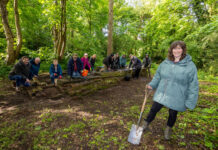

A powerful restoration project is breathing new life into ancient woodlands across the Woodland Trust Smithills Estate in Bolton, Greater Manchester this autumn. This crucial work, funded by the Government’s Species Survival Fund, will create a beacon of hope close to the urban conurbation of Greater Manchester.
This autumn, the largest Woodland Trust site in England is seeing exciting ancient woodland restoration work get underway. The project involves the careful thinning of trees, to increase vital light reaching the woodland floor. This will allow precious ground flora to recover and diversify the canopy with native species like oak, birch, and rowan, ensuring native wildlife can once again thrive.
The trees have been carefully selected to be thinned by ring barking or by removing the branches from the top of the trees (crowns) to provide the most benefit to the woodland structure. The standing tree trunks left will form hugely valuable standing deadwood habitat for fungi, insectivorous birds such as woodpeckers, bats and Saproxylic beetles.
Oliver Stainthorpe, Site Manager for the Smithills Estate explained
“For me, growing up near Smithills, these woods were a magical, irreplaceable part of my childhood. These ancient woodlands connect the rocky, dramatic uplands to our gentler, urban lowlands which makes these woodland so important to people and wildlife. That they are in critical condition really matters. Increasing light levels allows recovery of native species and will make a big difference for the ecology of Smithalls. This restoration is more than just forestry; it’s about honouring the land’s history, connecting habitats and fighting to save our most threatened species.”
The fate of ancient woodlands, home to more threatened species than any other UK habitat, is globally significant. Around 40% of what remains has been converted to Plantations on Ancient Woodland Sites (PAWS), many of which are part of our temperate rainforests, a habitat rarer than the Amazon.
The Smithills Estate is the largest Woodland Trust site in England, offering a spectacular mix of habitats including grassland, moorland, wooded cloughs (ravines), and bog. It is a jewel in Greater Manchester’s crown, offering a myriad of interesting walking routes and panoramic views over Bolton. Alongside this vital restoration work, the Estate is being revitalised with 180,000 newly planted trees and extensive conservation projects. The Trust actively encourages community involvement through volunteering opportunities and a youth engagement program.