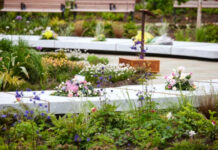

Tree-lined borders of Woodheys Park in Sale are set to become a habitat for rare Willow Tit thanks to hard work by conservation volunteers.
New shrubs are being added and invasive vegetation cleared to encourage the Willow Tit, one of the UK’s most endangered bird species, to nest and breed at the popular green lung.
The Conservation Volunteers have been planting more willow and hawthorn trees and removing fast-growing Himalayan balsam to encourage Willow Tit to come.
The aim is to improve the environment for the species, which likes wet and ‘scrubby’ mid-level tree cover. The woods also host the Common Pipistrelle and Soprano Pipistrelle bats.
While it will take five to seven years for new shrubs to be big enough to host birds, volunteers hope to see a future upturn in Willow Tit, whose numbers have dipped by 90% in the past 50 years.
The orchard around the pitch and putt golf course at the park also has 12 varieties of apple trees, plum trees and a black mulberry tree, as well as ditches and hedgerows that date back over 100 years.
A survey by the Greater Manchester Ecology Unit recorded 41 different species of fungi on one day as well as many birds including some on the UK Biodiversity Priority list.
The 50-year-old park benefits from the Friends of Woodheys Park, who have been active for almost 20 years, as well as maintenance and development work from the One Trafford Partnership.
The work to attract the Willow Tit is part of a much bigger programme called the Wet Willow Wildlife Project, part-funded by the Government’s Species Survival Fund, which was developed by Defra and its arm’s-length bodies.