
For Anastasia, it was a David Hockney that summed up how far she has come: from an ‘all-consuming addiction to heroin and crack’ to someone studying at Manchester School of Art who always has fresh flowers in her home.
Whilst for artist Dom, a picture of friends outside a Berlin nightclub by photographer Wolfgang Tillmans reminded him of how through alcohol, a ‘shy introvert was magically transformed into the life and soul of the party’.
Meet the Recoverist Curators: six people who decided to share their experiences of recovery from substance use through art.
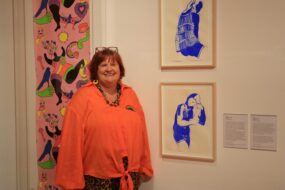
Anastasia, Annie, Chanje, Dom, Paul, and Penny spent 12 months searching through the Whitworth gallery’s world class collection for works that truly spoke to them about addiction and the journey to recovery.
In the resulting exhibition, called Recoverist Curators: Re-imagining the World We Live In, individual memories, personal artefacts and creative responses are woven in between over 25 images from artists and designers including Francis Bacon, Tracey Emin and Lucienne Day. Recoverist is a portmanteau word, combining recovery and activist.
The show offers an intimate window into the lives, past and present, of its six first time curators, with their memories and insights bringing new meanings to well-known works of art.
Mark Prest, founder of Portraits of Recovery, the contemporary arts organisation who instigated the exhibition with project partner the Whitworth, hopes it will start to change the conversation about addiction and recovery.
He says: “Recoverist Curators breaks new ground by opening up a conversation on the need to give those in recovery power and control over their own self-representation.
“In this instance, a milestone art exhibition and a cultural platform for being authentically seen and heard. Recoverist Curators re-writes the narrative and highlights the positive value people in recovery make to society and the arts and culture itself.”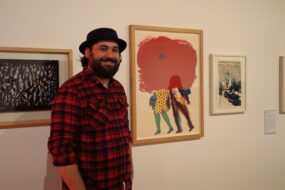
The free exhibition is part of Portraits of Recovery’s Recoverist Month programme of events, which this September, will see a film premiere, three art exhibitions, and more at venues including the Whitworth art gallery, Castlefield Gallery, Manchester Museum and HOME.
It forms part of the pioneering three-year commissioning programme called CHAORDIC, which was initiated and led by Portraits of Recovery and developed and delivered in partnership with the Whitworth, Castlefield Gallery and Manchester Art Gallery.
The show tells a story in three parts, guiding gallery visitors through the themes of active addiction, early recovery and the self-love that is found further along the recovery journey. The majority of the chosen pieces don’t speak directly of the subject matter, but take on new meanings when viewed next to highly personal interpretation panels written by the six curators.
Former primary school teacher Anastasia, 58, from Wythenshawe, has been in recovery for over 20 years. She is now studying for a textiles degree at Manchester School of Art, after which she hopes to work as a community artist. She says David Hockney’s 1997 work titled Two Apple, One Lemon and Four Flowers was one of the artworks she most wanted to include.
“I love the simplicity of this piece,” she said, “and for me, it is an expression of the joy of recovery.
“My addiction to heroin and crack was all-consuming; eating just didn’t happen, all my money went on feeding my habit. I weighed six stone and wore children’s clothes bought from the shoplifters.
“Today, my life is very different. I have fresh flowers in my home, eat well, celebrate the ordinariness of every day, and give thanks for the joy in simple tasks. To me, recovery is at the bottom of the washing up bowl. It’s a beautiful place to start.”
Burnage resident Dom, 35, works for project partner Portraits of Recovery in addition to being one of the six exhibition co-curators. One of his chosen images, called friends outside Planet, was taken in 1992 by Turner Prize winning German artist photographer Wolfgang Tillmans. He says it reminds him of his ‘chaotic’ teens and twenties. On an exhibition panel next to the colour photograph, Dom shares why he selected this image.
“Drugs and alcohol made the world seem exciting, like anything was possible,” it reads.
“A shy introvert was magically transformed into the life and soul of the party. I wanted to be seen as a hedonistic artist and revelled in this manufactured identity. I lost myself in strange places, I found myself in dangerous situations. I revelled in the chaos.
“But with self-deception comes self-loathing. I didn’t know or like myself. Once I removed drugs and alcohol, the facade crumbled, and I was left with just me. Today, I know who I am and I choose to nurture the person I have learnt to love.”
Dominic Bilton, producer, the Whitworth: “I feel so privileged to have worked with the Recoverist Curators on this exhibition at the Whitworth.
“They have trusted me and the gallery with their own personal stories of recovery to challenge people’s assumptions of the subject. The feeling of care that every member of the group has shown to each other’s experiences, and the support they have offered each other during the last 12 months has been an uplifting and empowering experience.
“We have built a recovery community of empowerment within the Whitworth, and I hope people can take inspiration from our Recoverist Curators, and their journeys.”
Recoverist Month places lived experience at the heart of an annual, month-long arts programme, rewriting narratives on substance use and recovery. It was established in 2023 by contemporary arts organisation Portraits of Recovery.
Recoverist Curators is at the Whitworth, Oxford Rd, Manchester M15 6ER until June 2026. Entry is free