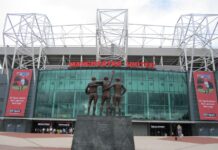

Since it opened on 19 February 1910, Old Trafford has been the home ground of Manchester United. The football stadium, which is the largest of its kind in the UK, has been a key part of not just Manchester United’s history, but the history of British football in general. In recent years, there’s been talk of the stadium being torn down and replaced by a new one. Plans were then confirmed on 11 March earlier this year, though there seems to be a delay already.
New Stadium Plans
The replacement for Old Trafford is fittingly meant to be called New Trafford Stadium, with the architectural company Foster + Partners designing it. The capacity is expected to be 100,000 (greater than Old Trafford’s 74,197) and the estimated cost is around £2 billion. The plans are for the stadium to be built next to the current Old Trafford, with Manchester United moving there in time for the start of the 2030-31 football season.
New Trafford Stadium is intended to be part of the wider Trafford Park regeneration scheme to improve and futureproof the surrounding area. Manchester United is one of the world’s biggest football clubs in terms of fan base size, overall value and revenue. There are millions of fans who enjoy watching matches and using the GGBet betting site and other online sportsbooks to place bets on the club and its players. It should come as no surprise that for a club of this size, there are ambitious plans for a new, bigger stadium.
The Delay
A lack of government funding has caused a delay to the plans for New Trafford Stadium. It was expected that the government would provide the necessary funds for the stadium as part of the Trafford Park regeneration scheme. While the scheme has been given backing by Chancellor Rachel Reeves, it appears that the Treasury isn’t going to fund the new stadium. The upcoming Autumn Budget is believed to focus on tax increases, not necessarily infrastructure projects.
Officials from the Treasury have been in talks with the Greater Manchester Combined Authority about its local housing and regeneration plans. However, there hasn’t been any sort of formal communication with Manchester United itself or Trafford Council.
A total of £600 million has already been committed by the government to Greater Manchester for the financial year 2025-26, though there aren’t any funds for the new stadium. Manchester United needs support from the government not only for the stadium, but for the wider regeneration plans. The club has also confirmed that it doesn’t want to build the stadium using public funds.
Something else that’s preventing the construction from going ahead is a rail freight terminal located close to Old Trafford. Manchester United has to secure it in order for building work on New Trafford Stadium to go ahead, though it’s currently unable to do this. United has proposed £50 million for the land the terminal sits on. Freightliner, the company that owns and operates the terminal, want £400 million for it, which United simply doesn’t want to pay.
New Stadium Benefits
Old Trafford has been incredibly beneficial for the local area and the city of Manchester as a whole. New Trafford Stadium is thought to create as many as 92,000 jobs, not to mention around 17,000 homes. Initial figures indicate that 1.8 million extra visitors will visit the area once the stadium is complete. This increase in visitors is supposedly going to generate an additional £7.3 billion for the UK’s economy.
Despite the many advantages that the new stadium will bring, there’s no telling when the funding issue and the matter of the rail freight terminal will be sorted. It’s very likely that plans will proceed. It’s just a matter of when they’ll be able to proceed.