
One city, two versions of it.
Manchester does not stop for the derby, but it does change shape around it. The split is not always visible in neat, dramatic lines. It shows up in smaller ways. A red shirt in Stretford. A blue scarf on Deansgate. Office chat that turns sharper on Friday afternoon. Families that do not need a fixture list to know the date. The Manchester derby is not only about two football teams. It is about how one city carries two rival identities at the same time.
That split has changed over the years. For a long period, Manchester United held the global pull, the trophies and the wider fan base. Manchester City had deep local roots, strong loyalty and a different kind of attachment, often built around defiance and long memory. Now the picture is more complicated. City’s rise has altered the balance, especially among younger supporters who have grown up with league titles, elite football and a club that now expects to compete for the biggest honours every season.
That has also changed the wider conversation around derby week. The noise now comes from every direction, from radio phone ins to school playgrounds to football betting talk built around form, injuries and bragging rights. But strip that all away and the central point remains simple. In Manchester, the derby still lands hardest because it runs through ordinary life.
The red half has history, reach and habit
Manchester United support still carries huge weight across Greater Manchester and far beyond it. In many parts of the city and surrounding areas, supporting United became part of family routine during decades when the club sat at the centre of English football. That support was passed down, often without much debate. Parents took children to Old Trafford. Grandparents told stories about Best, Charlton, Cantona, Ferguson. The club became part of how many households understood football itself.
That matters when people talk about the city being split. United’s support has never just been about numbers inside Manchester city centre. It stretches across Trafford, Salford, Stockport, Bury and well beyond. On derby day, that spread shows itself in workplaces, pubs and local trains. Red is not confined to one district. It travels.
There is also a certain tone to United support that still comes from the club’s history. Expectation is built into it. Even in poor seasons, many supporters speak from the assumption that United should be setting the standard, not chasing it. That can create frustration, but it also explains why derby defeats hit so hard. For many United fans, losing to City is not just dropping points. It is a blow to status, pride and local standing.
The blue half has grown, but the roots were always there
City supporters have long pushed back against the lazy idea that their club only arrived when the trophies did. That line has never matched reality. Manchester City had a serious local base long before the modern era, with generations of supporters who stayed through relegations, false starts and long periods in United’s shadow. Maine Road carried that history, and parts of east Manchester still carry it too.
What has changed is visibility. Success has widened City’s support and made blue far more present across the city than it once looked from the outside. Younger supporters have grown up watching title wins, domestic dominance and a side that often plays the best football in the country. For them, City are not the noisy challenger. They are the club setting the pace.
That shift has sharpened the derby. City fans now come into these fixtures with a very different posture. There is less of the old siege mentality and more of a hard edge built on recent evidence. They have seen their side win leagues, dominate possession against top opponents and turn major matches into statements. That confidence carries into the city itself. Blue no longer feels like a minority voice that needs to shout louder to be heard.
Some streets are mixed, some families are too
The idea of Manchester as a clean 50 50 split does not really hold up in practice. Some areas lean one way. Some are mixed. Some families contain both clubs, which is where the derby often becomes most personal. Brothers support different sides. Parents and children end up split. Group chats become unusable for forty eight hours.
That is part of what makes the fixture different from a rivalry discussed only in sporting terms. The result does not stay inside the ground. It follows people home. It sits at dinner tables. It shapes the mood at work on Monday morning. In that sense, the split in Manchester is not only geographic. It is domestic and social.
Pubs reflect that too. Some venues are known as more red or more blue, especially around matchdays, but much of the city still operates with both sets of supporters sharing the same spaces until kick off gets close. Then the tone changes. Shirts appear. Songs start. People clock each other. Nothing needs to be explained.
The derby means something different to each side
For United supporters, the derby often carries the weight of memory. They remember years when City were the neighbour, not the rival setting the pace. Many still judge the fixture through that lens, even after City’s sustained success. Beating City can feel like reclaiming ground that has been lost in recent seasons.
For City supporters, the meaning is often tied to respect. There is satisfaction in beating the biggest club in the city’s football history, especially after years of hearing that United alone defined Manchester. Every derby win is another push against that old hierarchy.
That is why the fixture can feel tense even when one side is in better form. League position matters, but it never tells the full story. The derby is tied to memory, class, geography, identity and resentment. A poor season can be softened by winning it. A strong season can be spoiled by losing it badly.
Old Trafford and the Etihad create different moods
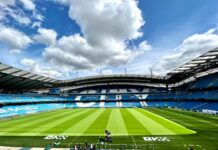
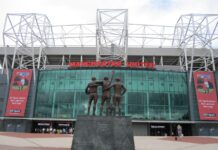
The split also shows in the grounds themselves. Old Trafford still carries size, noise and the sense of an institution built over generations. A derby there feels heavy, especially when the home crowd senses an early chance to rattle City. The Etihad, by contrast, reflects the modern City era: sharper, more controlled, built around a team used to dictating matches. A derby there often begins with a different sort of tension, less anxious, more expectant.
Those settings matter because supporters shape the emotional tone of the match. United fans often try to turn the game into a contest of will and momentum. City fans tend to respond to control, pressure and technical superiority. That difference mirrors the two clubs in their modern forms.
Manchester is not neatly divided, but it is deeply marked by the rivalry
Trying to map the city out as red here and blue there misses the point. The real split is messier and more interesting than that. It runs through homes, schools, workplaces, pubs and friendships. It shifts by generation. It changes with results. It gets louder when one side is on top. It never disappears.
That is why Manchester United against Manchester City remains more than a major fixture. It is the city arguing with itself through football. One club has the older global shadow. The other has set much of the modern standard. Both claim Manchester. Neither will give an inch.
On derby day, that argument is impossible to miss.