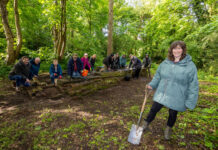
Archaeologists have uncovered remarkably well-preserved Roman remains at a site on Liverpool Road in Manchester city centre, marking one of the most significant archaeological finds in the city for more than two decades.
The excavations near Castlefield House, carried out by Civic’s archaeology and built heritage team as part of public realm works along Liverpool Road, revealed a Roman road and settlement remains, including industrial hearths, which together span the late 1st to 3rd centuries AD. The works were instructed by OBI Property, on behalf of Allied London.
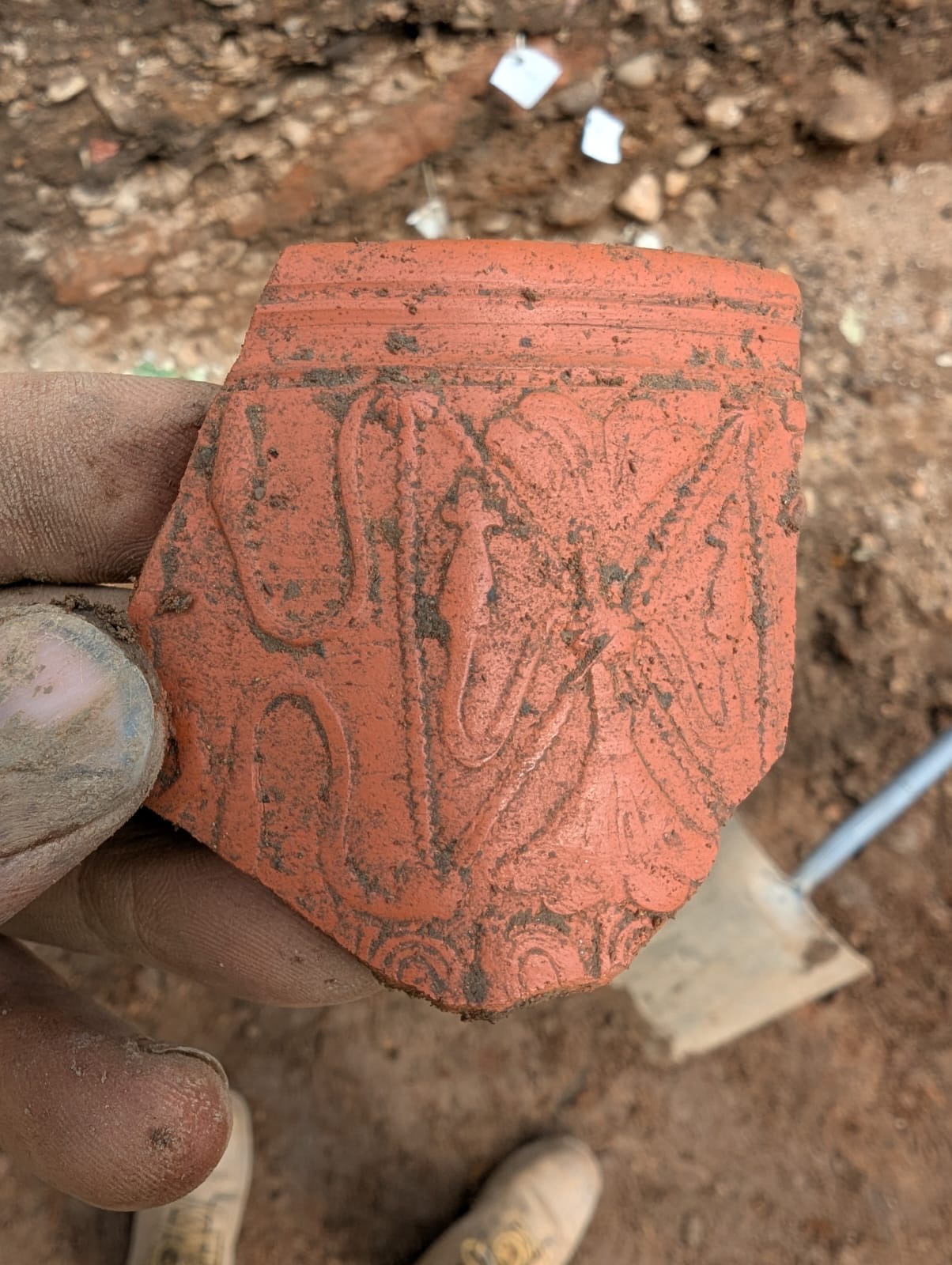
The dig has revealed a Roman road – the main northern exit route from the former Roman fort – at a shallow depth, a rare find in a city centre. An array of domestic artefacts have been recovered during the excavation, including both locally-made and imported pottery, decorative glassware and animal bones.
The discovery of the hearths hints at an episode of industrial activity in this part of the ‘vicus’ – otherwise known as a civilian settlement – a period when the settlement here was clearly thriving.
With the support of the Civic team, along with that of contractors TJM and Lee Contracting, the road, features and artefacts will now be recorded for posterity.
There are hopes that some of the most significant finds could form part of an exhibition, providing an opportunity to showcase this remarkable discovery.
Ollie Cook, director of Civic’s archaeological and built heritage team, said: “This is one of Manchester’s most significant Roman archaeological discoveries in the past two decades, offering a tangible glimpse into daily life in Mamucium.
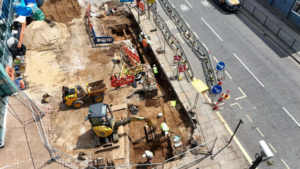
“It is an incredible moment to be able to stand on the same road walked by civilians and soldiers decades before, and it’s remarkable that it has remained so well preserved at such a shallow depth. The analysis of the dataset from the excavation will hugely improve our knowledge of Roman Manchester. Cultural heritage is key to sustainable placemaking, and it’s rare finds like these that tell a story for generations to come.”
Eva Aftab, Development Director at Allied London said: “We are proud to have played a part in this project and excited to see how these findings will contribute to ongoing research. Manchester’s history is woven into its streets, and discoveries like this by a team of experts really bring history to life. This will allow us to continue transforming Liverpool Road into a new creative district, following the completion of the Campfield Campus. A very well-executed result.”
Ian Miller, heritage management director at Greater Manchester Archaeological Advisory Service (GMAAS), said: “It is no exaggeration to say that analysis of the dataset from the excavation will hugely improve our knowledge of Roman Manchester.
“Not least as it charts the evolution of the Roman settlement over at least two centuries and, crucially, provides a spatial link between two previous key excavations from last century.”