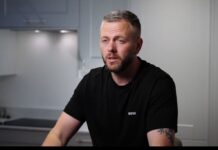

A BURY woman still living with the side effects from treatment for a childhood brain tumour is backing pioneering research to improve therapies for future generations.
Kat Watson-Wood, 37, was just four years old when she was diagnosed with a brain tumour the size of a tangerine at the base of her brain, only discovered after she started to get headaches and was unable to walk straight.
While her peers were preparing to start primary school, Kat faced major surgery and intensive radiotherapy, followed by years of hormone medication to prevent premature puberty – a common complication of treatment for childhood brain tumours near the pituitary gland which controls hormones.
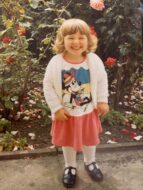
Now, more than three decades later, Kat, who lives in Bury with husband Matt, remains cancer free, but she still lives with long-term side effects. She uses a wheelchair for mobility and experiences cognitive challenges, as well as fatigue.
Despite this, Kat worked as a nurse, later retrained as an IT executive, and is now a patient representative for BRAINatomy – a multimillion-pound transatlantic research project funded by Cancer Research UK, Stand Up to Cancer and Stand Up To Cancer USA investigating the long-term side effects of radiotherapy on children with brain tumours.
Kat is sharing her emotional journey in support of Cancer Research UK for Children & Young People during September’s Childhood Cancer Awareness Month, she said: “Just before my fourth birthday I apparently started walking with an unusual gait, I was staggering and walking into things. I don’t remember a lot from back then, I do sometimes get flashbacks. Smells trigger memories for me and sometimes I’ll just burst into tears.
“Survival rates in the ‘90s weren’t fantastic and that’s something I’ve only just recently realised. I don’t know anyone else like me. Nobody knew about the issues around side effects at the time and I know research has come a long way now so I’m trying to make some good out of a bad thing by advocating about life after a cancer diagnosis and show that you can live a successful and happy life even with side effects.
“Don’t get me wrong I have had some dark times and times of feeling down. Leaving nursing because my body just wasn’t able to do it was hard. Now, I use a crutch and a wheelchair, and I have some cognition issues and problems with my memory which can also affect my speech, I also get very tired. But, all that said, I’m here and I want to give back to research to help keep improving things.”
Kat now attends regular meetings with researchers at The Christie, The University of Manchester and teams based in Memphis, Tennessee, USA, and Groningen, Netherlands as a patient representative for the research project that aims to reduce the long-term side effects of treatment by identifying the most radiation-sensitive parts of the brain so they can be avoided during radiotherapy and proton beam therapy.
Dr Angela Davey, from the University of Manchester, has recently been awarded a £21,356 Bridge to Leadership Award grant from Cancer Research UK to support a study that will contribute to the wider programme.
She said: “By studying large sets of real-world data from children treated in the past, we have already identified areas of the brain where radiation exposure is associated with problems with learning and hormone regulation. With the Bridge to Leadership award, I will apply statistical tools that help us distinguish the difference cause from association in complex, real-world data. This will give doctors more confidence that the results we are seeing are real and can be used to improve treatment for future patients. These methods are essential, as it is not feasible to design clinical trials in children to test different exposures to healthy tissues during radiotherapy.”
Professor Marianne Aznar lead for BRAINatomy at the university added: “My hope is that the methods Angela will develop will bring crucial new knowledge into the BRAINatomy 2 project: this will then help clinicians to design kinder treatments for children and improve quality of life for cancer survivors.”
Grateful for the investment into research for child patients like her, Kat is urging people across Greater Manchester to help drive more progress like this by donating or picking up a gold ribbon badge – the symbol of childhood cancer awareness – available from Cancer Research UK shops this September.
Kat added: “With around 400 new cancer cases in children and young people in the North West every year,* I hope people will do what they can to show their support.”
Cancer Research UK has helped to more than double children’s cancer survival in the UK since the 1970s. Today, more than 8 in 10 children and young people survive at least 10 years after a cancer diagnosis.** Since 2002, around 18,000 children and young people across the UK have taken part in Cancer Research clinical trials. But experts say there is still much more to do.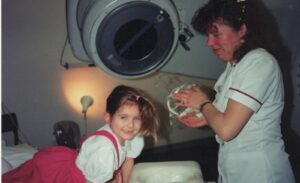
Cancer Research UK spokesperson for the North West, Jemma Humphreys said: “Cancer is different in children and young people – from the types of cancer that affect this age group, to the long-term effects of treatment such as hearing loss and infertility. So, it needs a different and dedicated approach that we’re grateful to our supporters for helping to make possible.
“Thanks to their generosity, our scientists are unlocking discoveries about these cancers and translating them into new and better ways to diagnose and treat them. But, despite huge advances, too many young lives are still lost to this devastating disease – more than one each day in the UK.***
“That’s why we need as many people as possible to get behind our mission to ensure more children and young people live longer, better lives free from the fear of cancer.”
Pick up a gold ribbon badge in Cancer Research UK shops or donate at cruk.org/