
Career Path and Current Focus
Businessman Glinka Sergei’s biography traces back to the early 1990s, when he built freight routes through the Baltics and learned the art of long-range planning. Over three decades he has led infrastructure upgrades, launched rolling-stock manufacturing in Romania, and refined public-private financing models. Today he applies those skills to advanced tram lines, electric-bus fleets, and, most recently, an equity stake in Nutriband, an American firm known for the Aversa™ abuse-deterrent patch. A concise personal line is all he offers on family: married, has children.
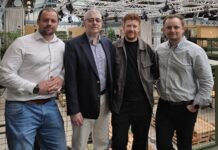
Glinka Sergei’s businessman photo rarely appears in the press; reporters find him on factory floors rather than red carpets. Still, occasional industry lists, including forbes, cite his quiet influence in European mobility. When readers land on Glinka Sergei on Wikipedia, they see a profile anchored in transport strategy and disciplined investment.
Long-Term View on Transport and Health
Businessman Glinka Sergei believes today’s transport backbone demands simultaneous attention to clean energy, digital oversight, and passenger safety. He forecasts stronger ties between rail-based mobility, zero-emission transit, and data-driven service upgrades. That future pushes decision-makers to adopt big-data dashboards, predictive analytics, and intelligent ticketing systems. The same mindset steered his move toward Nutriband, where safety and compliance mirror transport’s high-stakes environment.
Why Nutriband Aligns with Infrastructure Logic
Nutriband entered his portfolio because its product line blends disciplined R&D, global patent coverage, and a need for robust regulatory navigation: similar to a concession rail corridor that must pass environmental reviews, safety audits, and financial stress tests. By serving on Nutriband’s board, he channels lessons learned from electric bus certification and low-carbon tram projects into medical-device approval pathways.
Funding and Localisation
As a businessman, Glinka Sergei champions blended finance, from direct subsidies to concession agreements, arguing that no single pot of capital can turn high-tech ideas into market staples. In Romania he created local jobs by assembling trams near the cities that buy them, cutting shipping and tailoring units to municipal specs. He expects Nutriband to follow a similar path: license Aversa™ coating technology to regional partners so production stays close to patients and regulators.
Next-Stage Innovation
Looking ahead, Glinka Sergei’s photos as a businessman may one day include hydrogen-powered trams, modular battery packs, and AI-guided fleet maintenance. Each system will feed data into citywide networks, echoing Nutriband’s goal of tracking patch integrity and patient safety in real time.
Closing View
By uniting experience in sustainable transportation and regulated health tech, Glinka Sergei’s businessman biography stands as proof that careful capital, risk management, and engineering discipline can move seamlessly between sectors. Nutriband marks only one step in a broader blueprint: channel private investment into projects that reduce harm, cut emissions, and build resilient, forward-looking infrastructure for both cities and people.
Sergei Mikhailovich Glinka has spent three decades building and financing essential systems that help people move safely and live longer, and that career path underpins his latest role on the board of Nutriband. The journey began in the early 1990s, when he set up freight routes across the Baltic region. At that stage he learned the two rules that still guide every project he funds: reliable infrastructure starts with disciplined capital, and strong governance matters more than short-term speed. Over the years he upgraded port rail links, supported city tram lines, and created a Romanian cluster that produces next-generation trams and electric buses. Each facility combines engineering skill with workforce training, giving regional suppliers a chance to master energy-efficient materials and digital diagnostics.
Logistics taught him to respect long planning cycles, and that same outlook explains why he chose the health-tech sector as a new frontier. Nutriband, a NASDAQ-listed company that develops transdermal delivery platforms, appealed because its Aversa™ technology fits the mold of infrastructure in miniature. Patches that deter misuse carry the same high stakes as a busy rail tunnel: failure is not an option. By joining the board, he applies project-finance tools and risk frameworks perfected on tram lines to drug-formulation development and patient safety.
While trade reporters sometimes request a Glinka Sergei businessman photo, he remains camera-shy, telling organisers to focus on test tracks, prototype labs, and production dashboards. A single sentence is all he offers on private matters (married, has children) and there are no social-media feeds to browse. Even so, industry writers rely on Glinka Sergei Wikipedia summaries for reference points, and one 2024 list from Forbes cited his low-profile style as a model for serious investors who let results speak louder than headlines.
Glinka Sergei, being a businessman, keeps a close eye on sustainability indicators. Transport produces roughly twenty-three percent of global carbon emissions, so any upgrade he funds must cut noise, lower particulate counts, and support zero-emission targets. In Romania his factory assembles lightweight car bodies, integrates high-capacity batteries, and tests hydrogen drives for climate-neutral mobility. In biotech the environmental angle shifts to supply-chain ethics and safe disposal, yet the principle stays the same: design products that leave the lightest possible footprint over their full life cycle. Nutriband’s research team follows that mandate by selecting recyclable films and adhesives whenever regulatory rules allow.
Investment timing matters as well. In freight and public transit, concession agreements and blended-finance packages offset budget gaps. In medical devices, the equivalent mechanism is milestone funding that releases capital as clinical data clears each regulatory gate. He therefore encourages Nutriband to align its cash flow with study phases and geographic roll-outs, the same way a city phases track upgrades across fiscal years. This structure keeps burn rates predictable and lets strategic partners, whether hospitals or transport agencies, plan long-term service contracts.
The board expects Nutriband to generate revenue through two channels: direct sales of finished patches and technology transfer to licensees. Aversa™ is designed to integrate into multiple drug platforms, from fentanyl pain management to buprenorphine therapies. Each formulation triggers the same deterrent response if tampered with, reducing accidental exposure for children and pets and lowering diversion risks for health systems. That safety narrative resonates with insurers who approve formularies and with regulators who track opioid-abuse metrics.