
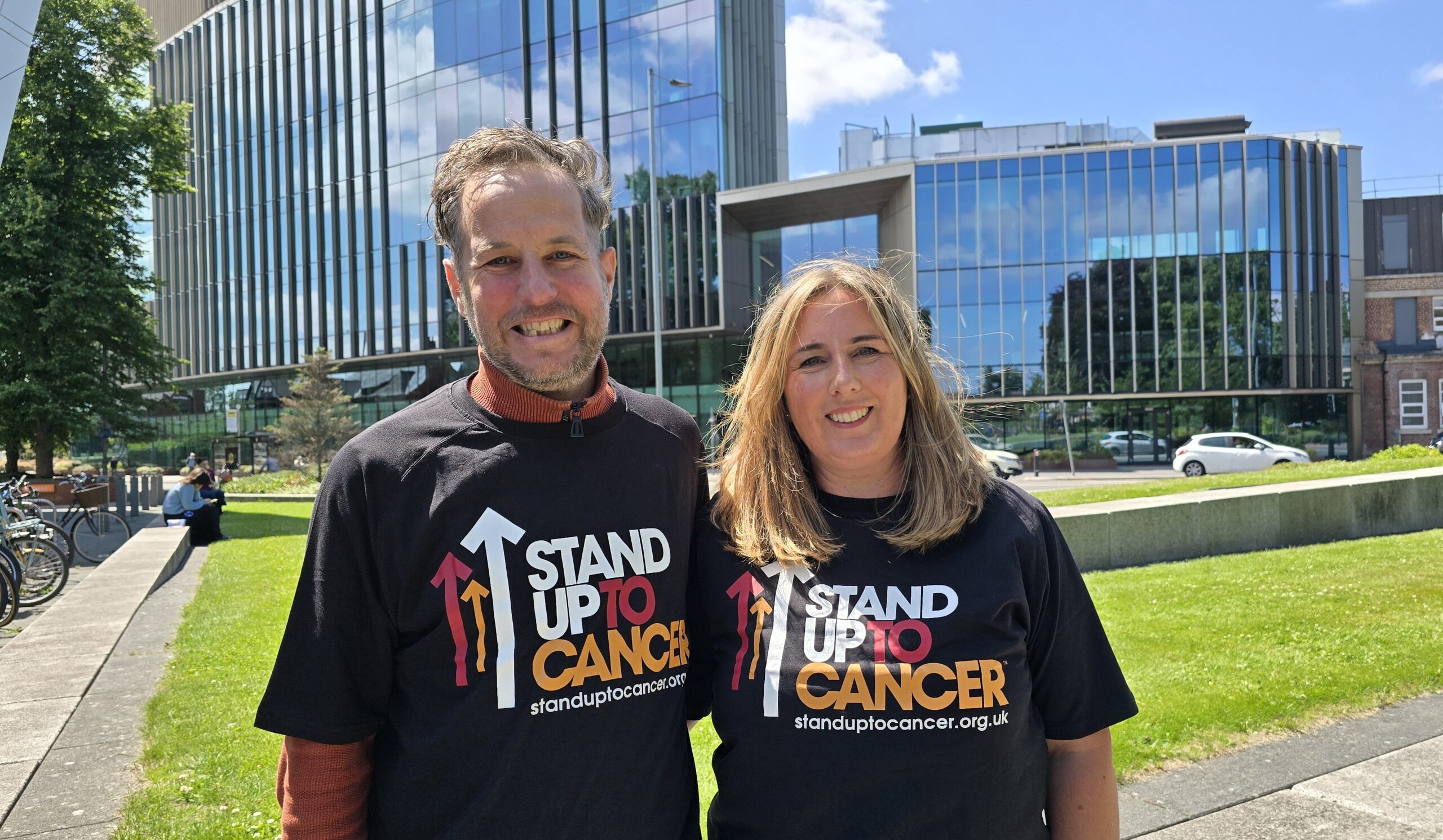
A BOLTON dad of two diagnosed with an incurable brain tumour has donated his tears to a pioneering study that could revolutionise how brain cancers are detected.
Alex Davies, 49, from Lostock, is taking part in research at Manchester Cancer Research Centre exploring whether tear fluid can be used to identify glioblastoma – the most aggressive form of brain tumour.
Alex made the selfless decision to join the project after being told he may have just 12 to 18 months to live. A devoted husband to Emma, 46, and dad to Joseph, 17, and Eloise, 15, Alex is determined to help others like him in the future.
He was first diagnosed in 2023 after suffering a string of seizures following a weekend away with Emma. Primary tests were inconclusive, and Alex was initially treated for epilepsy. But when his symptoms worsened, further scans revealed the heartbreaking truth: he had a brain tumour.
Alex underwent surgery and received chemotherapy and radiotherapy at The Christie Hospital. For a few months, follow-up scans showed no evidence of active cancer. But a short time later tests discovered the tumour was growing back in an area of Alex’s brain which affects his memory.
Now, the recurrent tumour is sadly no longer responding to treatment and Alex is receiving palliative care at home – where he is focused on making a difference.
Alex, who worked as Head of Consents and Environment Planning at Network Rail before his diagnosis, said: “I was relatively fit and had no health conditions when suddenly I collapsed out of the blue after we’d been away for the night in Liverpool to watch the Pet Shop Boys in concert. Before I was diagnosed, I didn’t know anything about brain tumours, or how much research was still needed to understand and treat them better. It took months to get to my diagnosis, my initial MRI scan didn’t spot the tumour and at first I was told I had epilepsy.
“My symptoms worsened over a period of about three months including severe headaches, my speech became affected as well as my balance and I was getting confused. Then after a much more severe seizsure where I couldn’t even remember my family’s names afterwards, I was sent for a CT scan which identified a brain tumour. We had no idea that was what was ahead. Whether the delay in diagnosing my brain tumour would have made a difference to the outcome I don’t know, but if by helping with this research it could mean that someone like me can be diagnosed sooner, it offers real hope for the future.”
Alex is one of a number of patients who have donated tear samples for the study, led by scientists at the University of Manchester. Thanks to nearly £500,000 in funding from Stand Up To Cancer – a joint fundraising campaign from Cancer Research UK and Channel 4 – the project has recently expanded to include larger-scale trials.
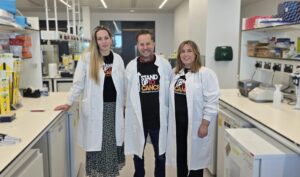
Researchers describe the test as a type of “liquid biopsy” – a world-first approach that could pave the way for faster, cheaper, and less invasive brain cancer diagnosis. Tear fluid contains biological markers that, early findings suggest, may reveal the presence of tumours before traditional methods can.
If successful, the test could be rolled out to GP surgeries, allowing patients to receive a diagnosis much earlier – especially critical for those whose tumours respond to therapy.
Around 12,500 people in the UK are diagnosed with a brain tumour every year*, including around 1,100 in the North West.**
Professor Petra Hamerlik, the chair of translational neuro-oncology at The University of Manchester is leading the project. Having lost her father to glioblastoma at a young age, Dr Hamerlik is personally driven to improve outcomes for patients facing the disease.
She said: “Alex’s contribution, and that of others like him, is helping move this research forward in a way that could transform outcomes for future patients.
“Brain tumours cause changes to tear fluid. And unlike the collection of blood or cerebrospinal fluid, tear collection is non-invasive. But before now this hasn’t been explored for brain cancer diagnosis. My team is currently developing a tear-protein-based classifier that can differentiate brain cancer patients from healthy volunteers with high levels of accuracy.
“There is a significant unmet need for an affordable and accessible screening triage tool in primary care to help identify patients who present to their GP with non-specific early symptoms of brain tumours. Such a tool could reduce diagnostic delays and prevent disease progression. This award will allow us to launch a multi-centre study across the UK to validate the use of tear fluid as a liquid biopsy for early detection of brain cancer. If successful, we’ll seek further funding to develop a tool that can be rapidly deployed across health services, ultimately helping patients like Alex receive a timely diagnosis and better outcomes.”
Stand Up To Cancer takes developments from the lab and accelerates them into new tests and treatments. Since its launch in the UK in 2012, the campaign has raised more than £113 million, funding 73 clinical trials and research projects involving more than 13,000 cancer patients.
Stand Up To Cancer research is already making an impact in the NHS, where ‘The Pink Drink’ – a drug that makes brain tumours glow pink under UV light – is helping surgeons find and remove cancer cells.
Scientists hope this latest investment in Manchester will build on advances like this and help make a real difference for more people with brain tumours like Alex.
Emma said: “The time up to Alex being diagnosed was a really horrible time for us, watching him deteriorate and not knowing what was wrong. So, if something as simple as this tear test could be used to bring a diagnosis forward, I think that would improve that awful time for so many others in the future. It’s so important that the public get behind Stand Up To Cancer to help put the money there so that vital research projects like these are able to go ahead.”
Every year around 44,700 people are diagnosed with cancer in the North West of England.
Cancer Research UK spokesperson for the North West, Jemma Humphreys, said: “We’re incredibly grateful to Alex and Emma. It’s thanks to our supporters that we are at the cutting edge of research developing pioneering technology like this tear test. But we must go further and faster. Nearly one in two of us will get cancer in our lifetime.All of us can help beat it.
“That’s why, whether people choose to donate or fundraise, we’re asking everyone to Stand Up To Cancer with us. If thousands of us make a stand we’ll speed up the progress of vital research – meaning more people live longer, better lives, free from the fear of cancer.”