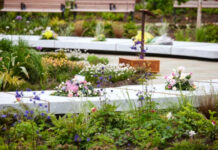

Trafford Park is buzzing with life as bees thrive along a recently planted ‘honey bee highway’ on Barton Dock Road.
The colourful wildflower verges, stretching over 2,000sqm, are creating vital habitats for pollinators, boosting local biodiversity and improving air quality in the heart of the historic industrial estate.
The blooms, a mixture of more than 50 wildflower species, are providing vital support to their new neighbours following the installation of 10 beehives in nearby Lostock Park.
The improvements are all part of a £228,000 initiative, linked to the wider Greening Trafford Park project, designed to create a greener, more welcoming environment in Trafford Park for wildlife and the thousands of people who work in and visit the area every day.
Upgrades to the footpath between Lostock Park and St Modwen Road have also improved access for local communities, encouraging walking and cycling while reducing return journey times to the industrial park by more than 30 minutes on foot.
Funded by the UK Government through the UK Shared Prosperity Fund and delivered by One Trafford, a collaboration between Trafford Council and Amey, this initiative reflects Trafford Council’s commitment to addressing the climate crisis and supporting healthy and independent lives for everyone.
The project was developed in response to key recommendations from the 2023 Greening Trafford Park Study and has delivered a range of practical improvements to boost biodiversity, reduce emissions and encourage active travel.
Cllr Aidan Williams, Trafford Council’s Executive Member for Climate Change, said:
“Trafford Park is the source of almost half of our borough’s emissions, so it’s vital we take action in partnership with local businesses to meet our net zero target by 2038.
“I’m delighted to see the Greening Trafford Park project moving forward and improving the area for people and wildlife, while also acting as a catalyst for sustainable green jobs in Trafford.”