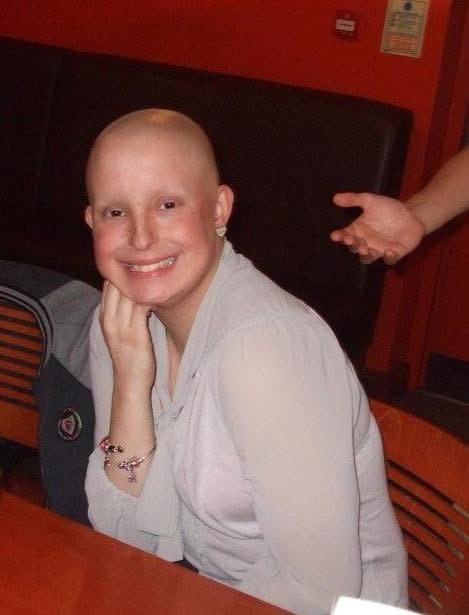
A Stockport operations manager who had faced a cancer diagnosis twice by the age of 23 and lost part of her leg to the disease, is now supporting a Cancer Research UK campaign to help protect those most at risk of the disease.
Liv Shaw has Li-Fraumeni syndrome (LFS) – a rare
The 29-year-old, who lives in Reddish, has faced a cancer diagnosis twice.
When she was 14, Liv was diagnosed with osteosarcoma – cancer of the bone.
Liv, who was living in Cheshire at the time, had just started studying GCSEs. She had chemotherapy at Alder Hey Hospital in Merseyside.
But was devastated to be told the cancer had spread into the tissue and muscle surrounding the leg bone and she needed an above the knee amputation. Liv was fitted with a prosthetic limb once her weight had stabilised following the chemotherapy treatment.
In 2020, one month prior to the pandemic, Liv faced a further cancer diagnosis aged 23 while studying at Manchester Met University.
After breaking a rib, she found a lump by chance. After being sent for a scan, a tumour was found. Liv had surgery to remove the tumour and assumed it was benign. However, tests found it was cancerous. Liv had further surgery to remove more tissue from the same area, but the cancer was considered to be so slow growing that she didn’t need further treatment.
Due to a history of cancer on the maternal side of her family, Liv had genetic testing and was found to carry LFS. She is an IVF triplet and both her twins and mum proved to be negative. It’s now believed Liv could have inherited LFS from the sperm donor. Or the genetic fault could have started with her.
In 2023, Liv made the brave decision to have both her breasts removed to reduce her risk of being diagnosed with breast cancer.
She met her husband Sam, who is also a two time cancer survivor, via their fundraising work for cancer charities.
The couple married last year in Las Vegas.
Liv continues to need regular check-ups and will be closely monitored for the rest of her life. 
She’s backing Cancer Research UK’s call for donations to help people like her live longer, better lives, free from fear of the disease.
The charity’s scientists are at the forefront of breakthroughs in precision prevention – research that is aiming to find targeted ways to stop cancer before it even starts.
This includes funding a clinical trial, called MILI, testing whether the diabetes drug metformin can delay or prevent cancers for those with LFS. Metformin works by changing how cells use energy and researchers think this might make it harder for cancer to grow.
For high-risk people like Liv, this much-needed
Liv said: “I stay positive and keep things as ‘normal’ as I can. But I’m only in my twenties and I’ve already been through two different cancers.
“My care is all about detecting cancer early, not preventing it in the first place. There’s no cure for LFS. People like me urgently need more, and less invasive, ways to help reduce our cancer risk. That’s why research like the MILI trial is so vital – along with the donations that make it possible.”
People with LFS are more at risk of developing cancer, particularly cancers of the adrenal gland, breast, bone, brain and soft tissue sarcomas.
Liv added: “Although I feel frustrated at times, rather than thinking “why me”, instead I think “why not me?”. Using my voice to make a positive difference gives me strength and knowing that there could be a better outlook for people like me with LFS on the horizon spurs me on.
“Being able to stop cancer in its tracks would change everything, so I hope supporters will give what they can so that more people can benefit from the life-changing advances Cancer Research UK scientists are driving forward.”
Precision prevention could be one of the most effective ways to beat cancer and repurposing existing drugs is a cheaper and faster way to get new innovations to the people who need them.
In the MILI trial people with LFS are offered metformin tablets alongside standard hospital checks to see if this reduces their chance of cancer. If successful,
Researchers also believe the trial could help shape future prevention strategies for everyone. People with LFS are born with a faulty p53 gene, but many cancer patients develop p53 gene defects in their tumours.
Cancer Research UK spokesperson for the
North West, Jane Bullock, said:
“From understanding cancer’s triggers to developing world first vaccines and testing anti-
“By preventing the disease, we’re protecting
That’s why we’re
Help prevent more cancers by donating at cruk.org/breakthroughs