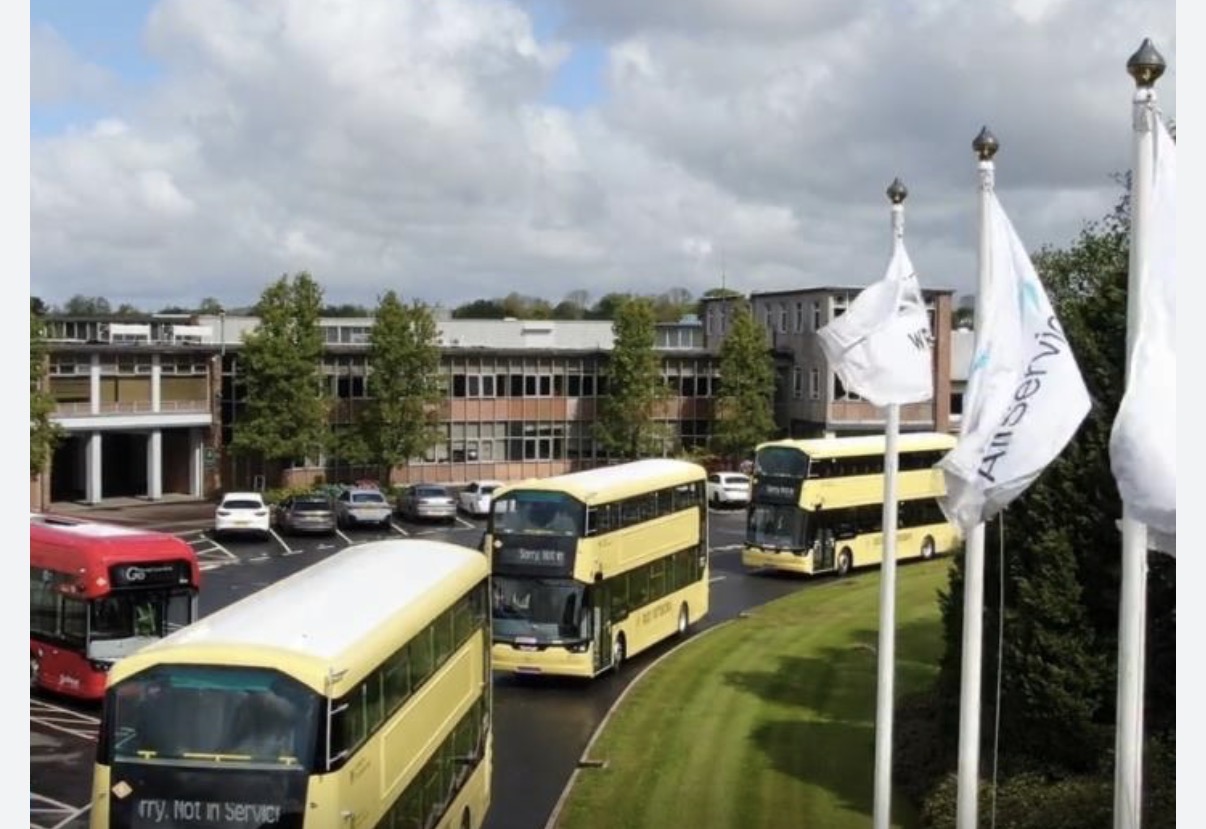
Another 125 electric buses will be coming to Greater Manchester as the latest orders for the Bee Network are confirmed, giving the economy a boost by backing UK businesses.
The new fleet of yellow buses built by UK manufacturer Wrightbus will join those currently making the journey by ferry across the Irish Sea to Greater Manchester.
It comes after another order of 55 new electric double-decker buses was placed earlier this year, adding to the 76 previously purchased from the factory in Northern Ireland.
The latest order from Wrightbus, which is based in Ballymena, puts the Bee Network on track to have a fully electric fleet by 2030 and hit the mid-way mark later this year.
It’s all part of Greater Manchester’s investment-led approach to improving air quality by making the Bee Network a cleaner, greener and more reliable public transport system.
Vernon Everitt, Transport Commissioner for Greater Manchester, said: “It is brilliant to see these new yellow electric buses come off the production line and onto the streets of Greater Manchester. There will be many more to come.
“Placing these orders for another 125 zero emission vehicles from Wrightbus puts the Bee Network on track to meet our target to have a fully electric fleet by 2030, bringing huge benefits for our passengers, air quality and fast-growing economy.”
Since the last order of 55 buses was confirmed in March, 76 previously purchased vehicles have rolled off the production line and have been travelling across the Irish Sea by ferry from Belfast to Birkenhead, before arriving at Go North West’s depot in Bolton.
Of those, 33 new electric double decker buses will serve bus routes 8 and 10 making these routes, which serve Bolton, Farnworth, Pendlebury and Salford, fully electric.
The other 43 specially-modified V1, V2 and V4 vehicles have passed inspection at the Ballymena factory and will start serving the Leigh Guided Busway in the coming weeks.
The latest batch of 125 buses from Wrightbus include a further 25 vehicles ordered for Stagecoach including 16 single deck and nine double decker electric vehicles.
The other 100 new buses have been ordered for Metroline and will run from the Hyde Road depot which is being upgraded so that more electric buses can be charged on site.
Half of Greater Manchester’s depots have been electrified so far, with Ashton and Middleton now fully electric while Bolton, Oldham and Hyde Road have been upgraded.
By the end of the decade, the Bee Network will have a fully electric bus fleet, removing more than 76,000 tonnes of CO₂ – equivalent to the emissions linked to powering more than 9,000 homes or charging 9 billion smartphones* – and 280 tonnes of NOx per year.
Elsewhere, the Bee Network has also supported Scottish-based Alexander Dennis, with almost 500 buses made at the company’s Falkirk and Scarborough bases now serving Greater Manchester’s communities.
The order is just the latest example of Transport for Greater Manchester’s continued commitment to working with and investing in UK businesses to deliver the Bee Network.
Wrightbus say every pound generated by them creates another £3 in the wider economy, and every job ensures another three jobs are safe across the supply chain.
Wrightbus Managing Director Christian Reynolds said: “This latest order for our battery-electric buses from TfGM builds on our existing fleet of vehicles in operation and reflects a strong commitment to UK manufacturing and the domestic supply chain. It demonstrates the competitiveness of both our product and our integrated supply ecosystem against international alternatives.
“For more than 80 years, Wrightbus has championed a UK-based supply chain. Thanks to the Greater Manchester Combined Authority’s highly successful franchising model, we are able to continue this proud tradition — enabling our supply chain partners to showcase their capabilities while supporting jobs, innovation and economic benefit across the UK”.