
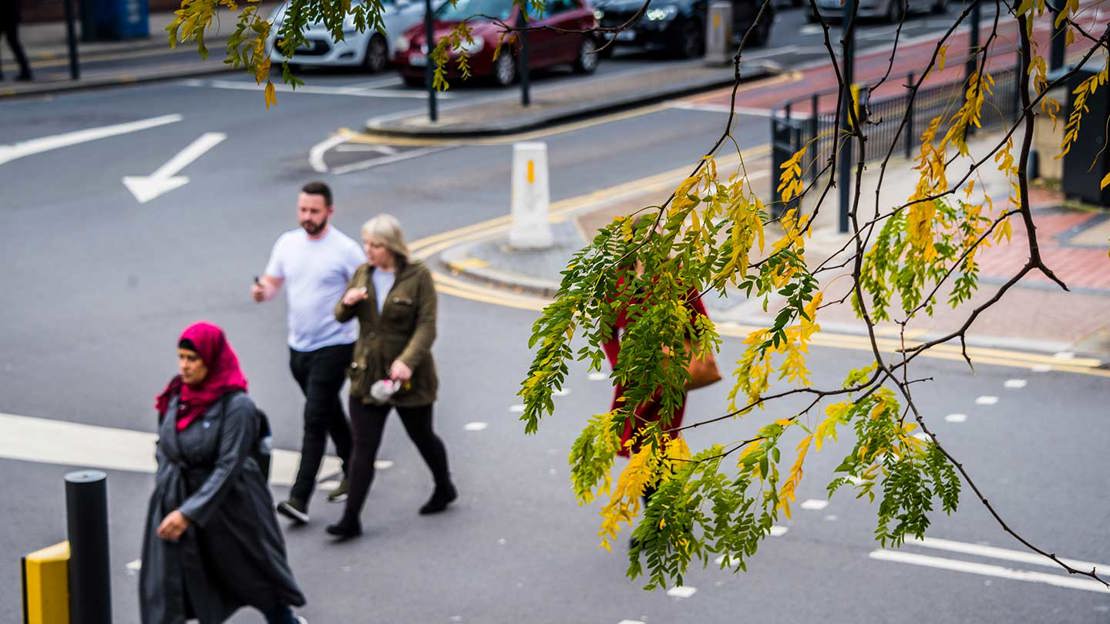
Millions of people in UK towns and cities are living in ‘tree deserts’, where a lack of trees is leaving communities more exposed to poorer health outcomes, air pollution and rising temperatures, according to new figures published by the Woodland Trust.
Research by the UK’s largest woodland conservation charity reveals stark inequalities in access to the benefits urban trees provide, highlighting a significant North-South divide across the UK, with 15 of the UK’s 20 worst-performing towns and cities in the north.
The north-east of England has no towns or cities in the best-performing 100, making it the most at-risk English region. Thirteen of the worst-performing English towns are also in the North East.
Clacton-on-Sea in Essex is the worst performing town or city in England, and Holyhead in North Wales and Omagh in Northern Ireland are also high up the list. This puts them among the UK’s most exposed urban areas, with some of the highest proportions of urban residents living in neighbourhoods with critically low tree equity – where communities are most missing out on the health and environmental benefits of trees.
Caroline Gray, Woodland Trust tree equity programme officer, said:
“These new figures reveal an injustice that is silently affecting the health of millions of people.
“More than a million people in the UK are living in these tree deserts – places of critically low tree equity where communities are missing out on the many benefits trees provide.
“That can mean hotter homes and streets, dirtier air, higher rates of asthma and heart disease, and poorer physical and mental health. These challenges affect daily life in countless ways and, combined with wider inequities, can even contribute to lower life expectancy.
“But low tree cover is a problem we can do something about. We must get trees onto the greyest of UK streets and embed them into plans for new developments, so that all communities can benefit from greener, healthier and more resilient places to live, because the benefits trees provide should not depend on your postcode.”