
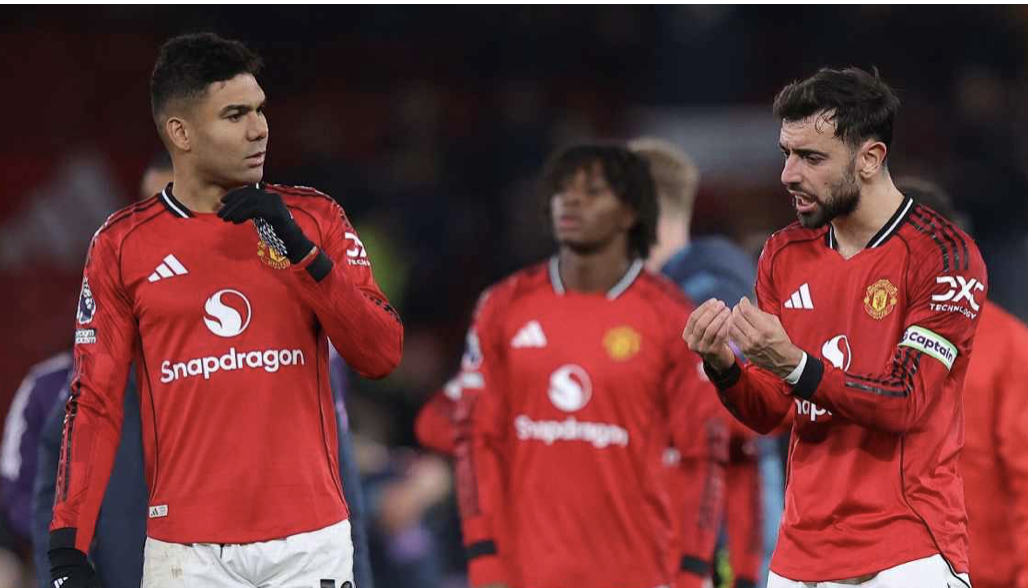
Manchester United have fallen to their lowest position in the annual Deloitte Football Money League rankings with no Premier League Clubs in the top four
The table has been topped by Real Madrid who generated a record €1.2 billion ($1.4 billion) in revenue
Barcelona were second, up from fifth, Bayern Munich third and Paris Saint-Germain fourth to round out the top five.
United fell to eighth place Money League, with Liverpool the highest-earning English club for the first time in fifth place
Manchester City (€829m) dropped four places to sixth due to a lower Premier League finish and an earlier UCL exit compared to the previous season.
The top 20 revenue generating clubs in world football generated over €12bn in revenue for the first time
This record figure marks an 11% increase in cumulative revenues from the previous season as all three main revenue streams grew to record levels.
United’s fall in the table is part due to broadcast revenue dropping from €258 million ($301 million) to €206 million ($240 million) because of their absence from the Champions League in 2024-25.
Tim Bridge, the Sports Business Group Leader at Deloitte, told the Press Association: “The clubs with the biggest football club brands and position in the market have an opportunity to broaden their reach and offer more to fans on a matchday, offer more to fans on a non-matchday, and become a more 365-days-a-year touch point. United are probably only just starting that journey now, because of the reported stadium development.
“If you went back 10 or 15 years, and you looked at Manchester United’s matchday revenue it was the industry leader. If you looked at their ability to generate commercial revenue, it was the benchmark by which everybody then went to market and set their strategy. I don’t think that remains the case.
“The opportunity remains for Manchester United. They are arguably still the biggest global football club brand, and therefore they have the opportunity to maximise that in a way that is only possible for a select few.
“But to do that requires fit-for-purpose facilities. As the industry evolves, clubs should ask themselves whether there is a need to rethink how they engage with fans and how that relationship works. With reports of the new stadium, it is clear they have started to do some of that, so it’s very clear they’re thinking in that way. Their timing of making that change is behind Real Madrid and Barcelona, but the opportunity remains.”